



“I can calculate the motion of heavenly bodies, but not the madness of people.” Sir Isaac Newton, 1721
The corporate sphere has consistently demonstrated ingenuity in devising governance tools and fads that purportedly signify managerial advancements, yet primarily serve to generate revenue for consultants and engender increased internal bureaucracy within organizations. While not all such innovations should be dismissed — and I acknowledge improvements in transparency regarding corporate financial management — what particularly merits attention is the functional deviation of management.
The primary objective of a private capital company within a capitalist economy is the generation of shareholder value. This constitutes the core business activity of the enterprise, without which its existence is unsustainable. Naturally, the company also fulfills a social function by paying taxes, creating employment, impacting the environment, and operating locally within its host society – see article Review of Leniency Agreements. However, this social role does not alter the company's ultimate purpose, which is the attainment of profit and the creation of value for its shareholders. As is well-known, profit is derived from a straightforward mathematical equation where revenue must exceed expenses.
Indeed, as corporations grew in complexity, management tools and corporate control models were progressively developed. Intriguingly, these novel instruments typically emerge in response to significant corporate crises, rather than from an organic managerial imperative. For instance, following the Watergate scandal, the FCPA (Foreign Corrupt Practices Act) was enacted in the U.S., ostensibly to combat corruption by American companies abroad, but which is now widely recognized as a tool for U.S. political interference in key global economic sectors. In response to the Enron accounting scandal, the Sarbanes-Oxley Act was legislated, aimed at combating financial fraud within major American organizations. This trend continued with the advent of compliance frameworks, board support committees, the role of independent directors on corporate boards, and, most recently, the ESG agenda.
These tools, in their original conception, aim to enhance corporate processes, yet in practice, they contribute minimally to the company's core business activity.
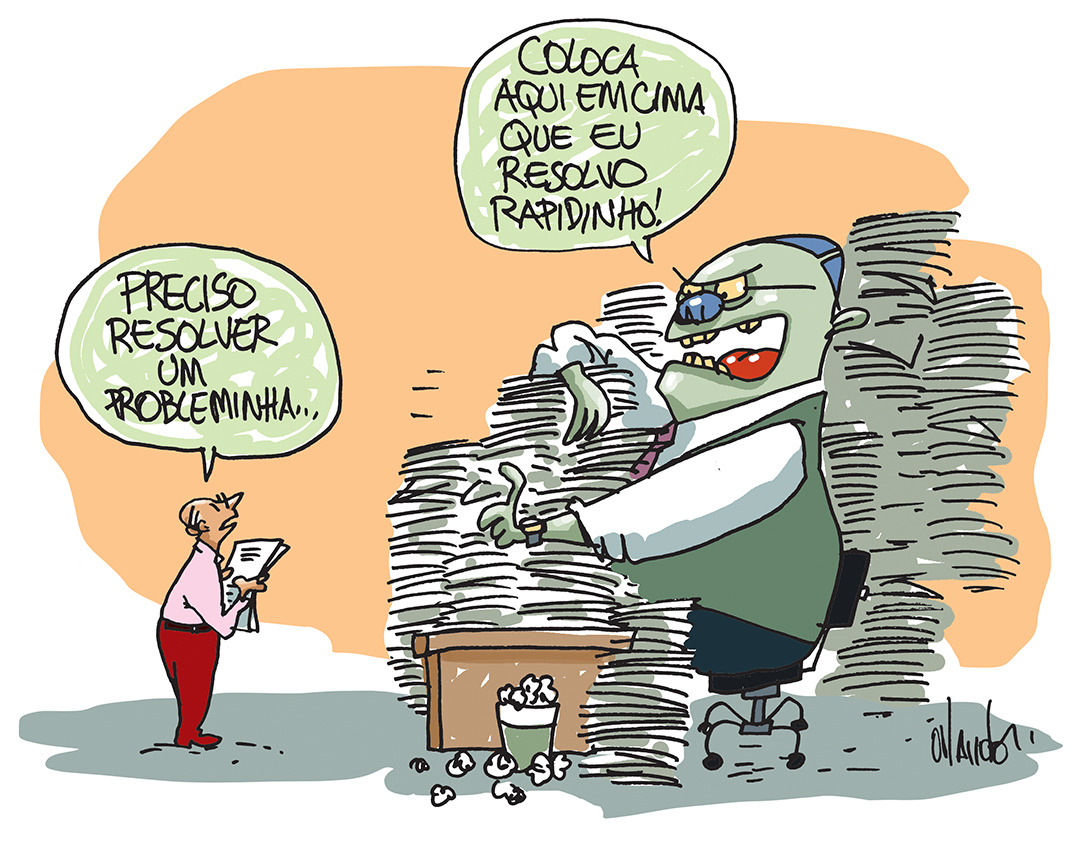
On the contrary, they are merely expenses, costs, and, more often than not, management impediments. They render companies cumbersome, bureaucratic, and devoid of the dynamism required to keep pace with today's market velocity. These are defensive, reactive tools that add little value to the company's core business. They emerge as a perceived “necessity” within the corporate environment, disguised as a specific diagnostic and control project with outsourced activities and a designated manager. This manager, enticed by the prospect of promotion, concludes that control must be internalized, transforming this ad-hoc project into a department under their leadership, with dozens of employees under their command, and now promoted to director. Subsequently, this new control department begins reporting directly to the board of directors, ostensibly for “greater transparency and independence.” The board, lacking the requisite expertise to manage this new function, then establishes its own advisory committee. Consequently, what began as a specific outsourced control project now employs hundreds of individuals to perform a function that generates no revenue for the company. The cost of this new department in large corporations routinely exceeds tens of millions.
The most intriguing aspect is that, confronted with this new tool suddenly introduced by the market, countless “specialists” emerge, adopting a professorial demeanor to calmly expound on a subject that did not exist the previous year. This presents a profound contradiction. Herein lies a genuine opportunity for artificial intelligence to resolve this antinomy.
The independent director on the board of directors represents another intriguing figure in today's corporate landscape.
Heralded as an impartial voice in management and thus free from any conflicts of interest, this director, in practice, rarely contributes meaningfully to the company's operational or strategic requirements. Their conduct is typically guided by a protective agenda, seeking to insulate themselves from liability in board decisions. They avoid assuming risks, not due to disagreement with the merits of the decision at hand, but to preclude exposure to future legal contingencies. Consequently, their allegiance is not to the company, but to themselves. I have witnessed absurd situations where an independent director retains their own legal counsel to safeguard their position on the board. Indeed, if an individual is not confident in serving as a member of a company's board of directors, they should decline the appointment.
To the resident poetasters, let me clarify upfront that I am not advocating for the elimination of corporate controls. I contend that transparency is essential, but decisions should not be delegated to control bodies. Nowadays, it is common to hear that “compliance does not permit a certain operation, or the hiring of specific individuals or companies.” How can compliance not permit it? This indicates a failure of management.
Within a corporation, decisions are made by the executive board, the board of directors, or, in certain instances, the general assembly. The absence of strong and capable leadership renders the company subservient to self-protective control mechanisms. This is attributable to weak and unfocused management.
More about
Economy


