



“Bureaucracy is the meticulous way of turning the possible into the impossible” – Friedrich Hayek
Franz Kafka's work is often interpreted as a representation of the human condition in a complex and often absurd world, involving alienation, bureaucracy, and the powerlessness of the individual in the face of oppressive systems. His stories invite the reader to reflect on existential and social issues.
Kafka often criticizes bureaucracy and the complexity of governmental and social institutions, showing how they can be inhumane and oppressive. His characters feel alienated from society and struggle to fit in or communicate with others, leading them to feelings of isolation, despair, and anguish.
Metamorphosis, his best-known work, depicts a protagonist who wakes up transformed into a cockroach, exploring the oppressive and inhumane relationship of society, which in reality sees the individual as an insect.
Everyday bureaucracy has become a system that, instead of serving, exists to protect the state and the companies of its members. The function of today's bureaucracy is to make you invisible, irrelevant, and difficult to access for decision-makers.
The buzzword in the corporate world is "respecting processes," understood as internal rules imposed on you so that someone you have no relationship with can decide whether you are fit to engage with the company. Only after this invisible verdict are you allowed to interact with them. Today, it is impossible to be hired to provide services to a large company except through a legal entity, as compliance does not allow the hiring of individuals. I will never understand this.
These bureaucrats, residing in an unreachable castle, eradicate operational flexibility and the capacity for innovation, without taking individuality into account. They redefine corporate culture, increase costs, undermine profits, and oppress their members, whose main fear is losing their jobs, turning employees into silent insects.
Technology is sold as a way to combat bureaucracy, through tools and applications that are supposed to simplify life. Nothing could be further from the truth at our stage of development.
Let's look at some examples of Kafka's prophecies in the bureaucracy of our daily lives.
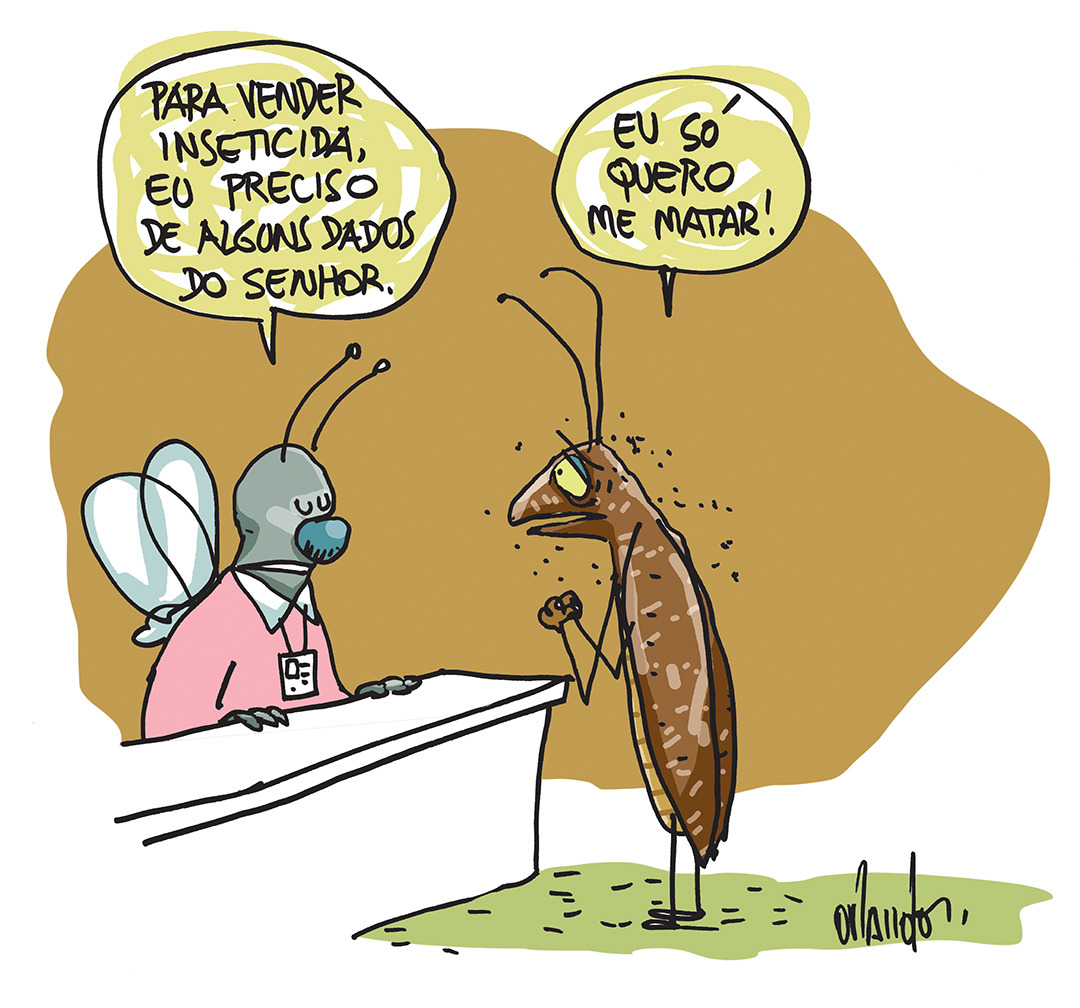
It is worth remembering that Kafka's world is organized and systemic, but that you have no one to talk to, and that no one knows anything. Therefore, no one can offer meaning to anything.
The banking system is one of the most Kafkaesque areas of the contemporary world. Personal interaction is increasingly absent. No one cares about the individual, only their money. Everything boils down to a universe of passwords and apps. If your transaction doesn't work, there's no one to talk to. Simple banking is a thing of the past. As Bill Gates said: "In today's world, banking (financial transaction services) is essential; banks are not."
Infrastructure companies such as electricity, gas, water, telephone, and internet are another Kafkaesque niche. You are left without electricity, water, or internet for days and have no one to talk to. If something goes wrong, you cry out in the wilderness, waiting for one of Kafka's digital mice to answer you.
No example is more relevant than last week's power outage in São Paulo, caused by strong winds. Poorly trained professionals were unable to provide convincing explanations or credible forecasts. These companies promise a digital paradise that does not actually exist. The app is never very efficient, requiring countless steps, passwords, and codes that expire. And in the end, the chances of you having to talk to one of those useless customer service representatives are enormous.
Another Kafkaesque segment is the world of airlines. You can't buy a plane ticket without using the internet. The mileage program is a lie. At the airport, any hiccup will leave the customer running around like a cockroach, not knowing what to do. Screw your connection and your commitment.
Even in everyday transactions, technology complicates everything. It is no longer possible to make simple transactions such as paying and receiving money. The other day, at a pharmacy, I encountered a surreal situation. With the exact amount of cash in my hand—and therefore no need for change or candy to replace coins—I found myself having to answer 11 questions to buy a simple bottle of shampoo. Do you want your CPF on the receipt? said the poor employee, forced to perform this ridiculous ritual. No, I said. And the torture continued. Debit or credit? São Paulo tax receipt? Are you registered with the store? Would you like to register? What is your name? What is your CPF? Are you a Porto Seguro customer? And so it went, with a myriad of questions for a simple purchase of shampoo in cash with no need for change.
Look where we've ended up. In the near future, I imagine someone going to the bakery to buy five rolls. This person will have to set up a legal entity, issue shares on the stock exchange, and meet the bakery's compliance requirements.
Franz Kafka, born in 1883, wrote The Metamorphosis in 1912. The work was only published in 1915. Nothing could be more relevant today.
More about
Behavior


