



While expectations surrounding the fiscal package to be approved by Congress continue, high interest rates over a long period are already affecting the volume of money in circulation and casting the shadow of a credit crisis over the economy, causing sequential losses for companies. It is worth remembering that even if interest rates begin to fall in May, it is estimated that the impact of the new rates on credit will take around nine months to be felt.
There is already a red alert about the growing difficulty companies are having in rolling over their debts and financing their activities. Banks have already begun to review their positions on companies and request additional guarantees for new loans.
The difficulties in the credit area are already causing concern on the demand side, in terms of companies seeking financing. However, after the Americanas case broke, fears spread to the supply side of financing. This is because many banks were creditors to Americanas and other companies that are facing difficulties in paying off their debts. Banks now have to make provisions for doubtful debts, impacting their balance sheets with lower profits and, as a result, becoming more reluctant to grant credit.
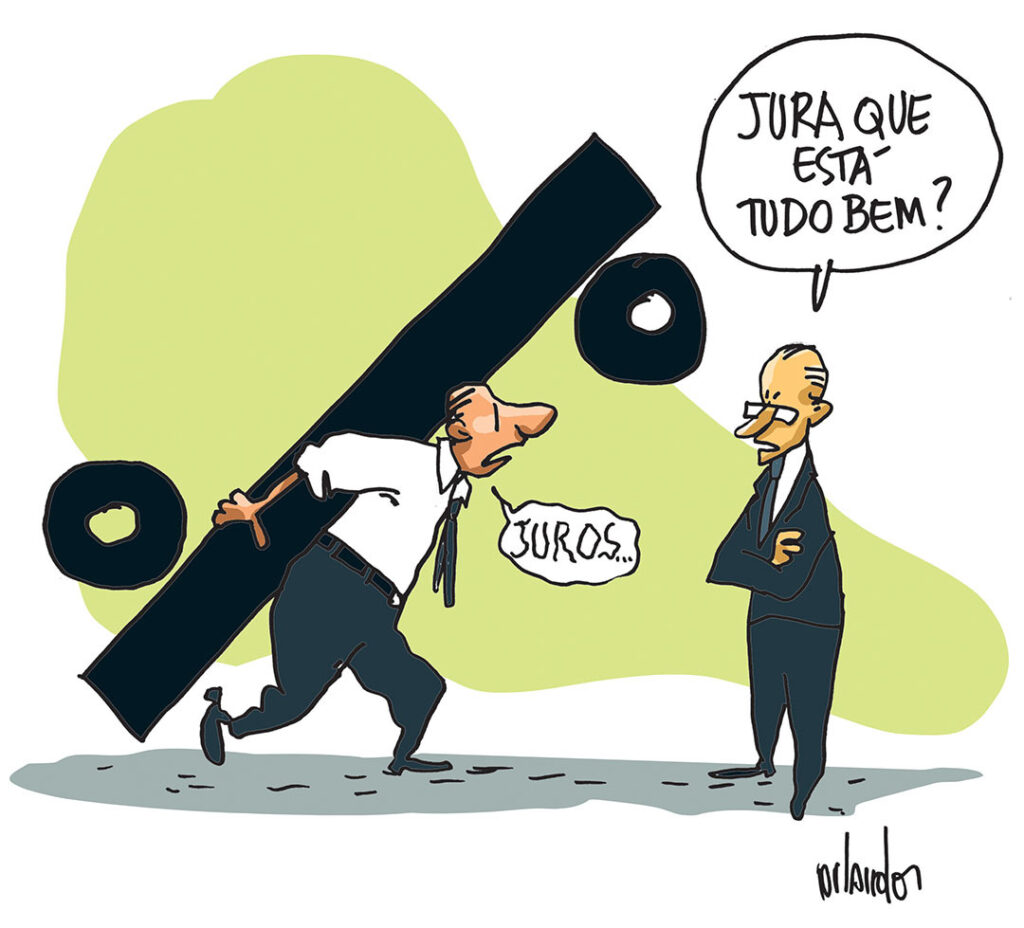
Currently, there is what is known as credit market contraction risk, as the economic slowdown and monetary tightening are factors that curb demand for credit. In these times of credit crisis, what Minister Delfim Neto often refers to as collective drowning due to excess liquidity occurs. Banks and lenders stop lending and seek greater credit liquidity. Companies halt investments due to the lack of credit and seek to survive by increasing the liquidity of their revenues. Workers, fearing job losses, stop buying in order to protect and preserve the liquidity of their resources. Investors become more conservative and increase their liquidity. The moral of the story is collective drowning due to excess market liquidity. Thus, a potential sequential effect of corporate bankruptcies could deteriorate the credit market on the supply side.
There are already many cases of companies struggling to honor their debts. Oi, with a debt of R$ 29.75 billion to 14 banks; Lojas Marisa, with a debt of R$ 550 million, implemented a significant change in its management; Via (Casas Bahia), another retailer in debt renegotiation, with R$ 3 billion in short-term debt; Light, the energy distributor in Rio de Janeiro, has already hired a law firm specializing in judicial reorganization; Azul had its risk rating downgraded by Fitch, given the difficulty of rolling over its debt; Gol has already announced a debt refinancing plan that was considered by Standard & Poor's to be similar to a partial default; and Cervejaria Petrópolis has just announced its judicial reorganization, with debts in excess of R$ 4 billion.
Consulting firms are already predicting a 2.8% drop in credit volume compared to previous figures, and analysts unanimously emphasize that a credit crisis, if not averted, could derail projections for economic improvement, leading to a recession by the end of the year.
Add to this the international banking crisis, with the collapse of Silicon Valley Bank (SVB) in the United States and Credit Suisse. These two cases are an indication that cracks in the global financial system are increasing and that these initial signs will have indirect effects on the world of business. Like a domino effect, the contractionary measure directly impacts the debt/credit ratio. Companies, especially in certain sectors, cannot survive with such high interest rates and the simultaneous end of easy credit.
As we are in the early stages of the contraction phase of this cycle and the number of leveraged companies is high, it is likely that the collapse of these banks and companies will be followed by other problems on an even larger scale. In other words, there will be forced sales of assets at very low prices—which should further affect credit granting—capital dilution, mergers and acquisitions, negative impacts on markets and the economy, and eventually, the relaxation of banking regulations to prevent the problem from becoming a threat to the financial system.
With this scenario and the Brazilian Central Bank acting in an autistic manner and out of context with the facts, the question remains: at what cost is such a high interest rate being maintained? There is a high risk that the consequences of the banking crisis abroad will deteriorate, forcing the FED (US central bank) to raise the real US interest rate to very high levels. Consequently, it becomes more difficult to invest in Brazil and reduce local interest rates. This will cause this cycle of negative impact on corporate borrowing to feed itself, leading more companies to halt investments and job creation.
More about
Economy


