



“Throwing food away is throwing people away” Pope Francis
On Tuesday, the Lula administration announced the 2023/2024 Harvest Plan, worth more than R$ 360 billion. One of the largest in history. The size of the new plan is a nod to ruralists, a sector that is not sympathetic to President Lula. The program provides for subsidized interest rates; mechanisms to curb commodity price fluctuations; and differentiated interest rates based on good environmental practices. However, it says nothing about food waste.
According to the Ministry of Agriculture and Livestock, the new Harvest Plan aims to stimulate sustainable food production and low-carbon agriculture. Most of the funds should be allocated to financing and marketing. Another portion should be allocated to investments. The program is also aimed at family farming and small producers. In other words, the government invests heavily in food production, but this food does not reach the 33.1 million people in the country who still go hungry.
Brazilian agriculture is undoubtedly a global success story in terms of technology. The highlight is the increase in rural productivity, which in turn depends on three essential factors of production: land, labor, and capital—the latter including machinery, equipment, fertilizers, and pesticides. The IPEA (Institute of Applied Economic Research) shows that, over a 45-year period (1975-2020), the labor factor fell at a rate of 0.42%, while the land factor increased by 0.04% and the capital factor grew by 0.84%. In other words, Brazil has become one of the world's largest agricultural producers mainly through investments in productivity. Econometrics shows that productivity accounts for almost 90% of total production growth in that period, and this increased productivity is due to technological modernization.
Why, then, is there still hunger in Brazil?
This raises the question: why then are millions of people still going hungry in Brazil? And why is the agricultural sector still competing with the environment, the Landless Workers' Movement (MST), and indigenous peoples for more land, if technology has proven to be more efficient?
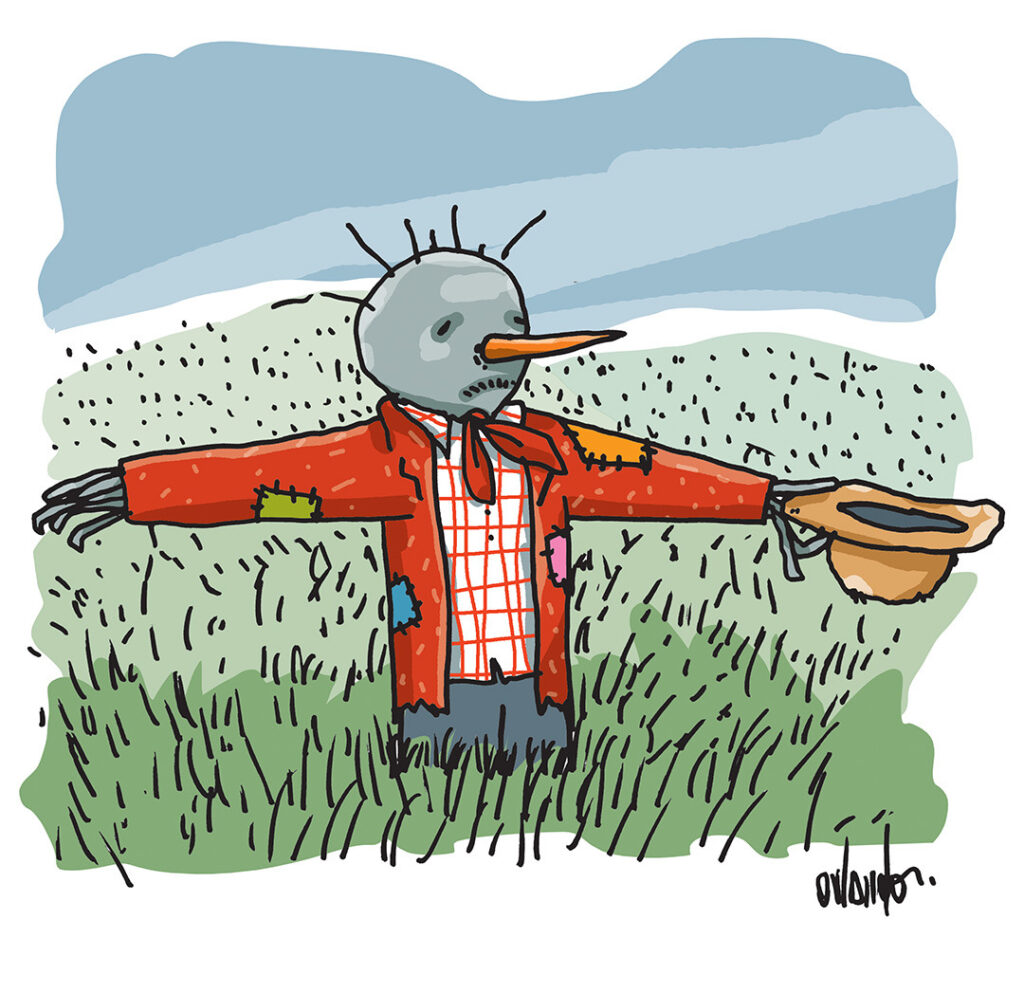
The answer to the first question basically lies in agribusiness's low investment in reducing food waste. The answer to the second question must be sought in politics, as agribusiness entrepreneurs are hungry for more land (land = power), and government subsidies and the government still invest very little in the education and technical training of small producers.
In December 1994, Folha published a special supplement with the headline “Brazil starves while throwing food in the trash.” The article, written by Bruno Blecher, shows the shameful figures of food waste from farm to plate, a paradox in a country ravaged by hunger. There are several other studies and surveys on food loss in Brazil and around the world. Despite countless warnings, waste continues to grow every year.
Brazil is among the top 10 countries that waste the most food in the world. According to a recent article by Bruno Blecher, about 35% of all Brazilian agricultural production goes to waste. According to the FAO (Food and Agriculture Organization of the United Nations), one-third of the food produced worldwide is wasted. This wasted food consumes one-quarter of all water and land used in agriculture and occupies an area the size of China, accounting for 8% of global greenhouse gas emissions.
The 10 million tons wasted annually in Brazil would be more than enough to feed the 33.1 million people who do not have enough to eat every day in the country, according to Rede Penssan (Brazilian Research Network on Food and Nutritional Sovereignty and Security). According to projections by Embrapa (Brazilian Agricultural Research Corporation), of the total food waste in the country, 10% occurred during harvesting, 50% during food handling and transportation, 30% at supply centers, and 10% between supermarkets and consumers.
The study "The Food We Throw Away - Causes, Consequences, and Solutions for an Unsustainable Practice," conducted by MindMiners in partnership with Nestlé, shows that only 4% of companies in the food industry have never discarded food, reusing it correctly. Among the 96% who said they discard food, 54% say they do so always or frequently.
According to calculations by Professor Rattan Lal, winner of the Nobel Peace Prize in 2007 and the World Agriculture Award in 2020, the world is already producing enough food to feed 10 billion people (the projected global population for 2050), but action is needed to reduce food waste.
Food waste is an issue that concerns even Pope Francis, who in September 2022 said: "... throwing food away is throwing people away," and the Supreme Pontiff continues: "There is enough food in the world for no one to go to bed hungry. The issue is undoubtedly one of social justice, that is, how the management of resources and the distribution of wealth are regulated." For the Pope, the entire international community should mobilize to put an end to the unfortunate paradox of abundance.
Understanding this issue is essential. Farmers have technological development on their side, which brings productivity gains to their crops. Aided by public policies and huge financial subsidies, they have enjoyed large margins and profits in their activities. Therefore, it is imperative to demand from the private sector a strong and effective program to combat food waste, with continuous monitoring, as there is no greater paradox than this in the country.
More about
Economy


