



We recently saw President Lula criticize the autonomy of the Central Bank after the latest decision by Copom (Monetary Policy Committee), which maintained the basic interest rate (Selic rate) and signaled its intention to keep it unchanged throughout the year, given the increase in inflation expectations. It was the first decision by the independent collegiate body under the new government with the board chosen by the previous government, with a four-year term.
President Lula's criticism of the Central Bank president is seen by the market as a war of words between the two. The Central Bank signals concern about the direction of the economy, and the president responds with complaints about the Central Bank's independence. This exchange of barbs is not only unnecessary but also highly inappropriate. It harms the country, causes insecurity, and ends up penalizing consumers with the impact of this instability on inflation expectations and, consequently, on interest rate increases. It is a situation in which everyone loses. The president of the Central Bank loses because, despite his legal independence, there will be a need to replace the bank's directors in the coming months due to the end of their respective terms. Clearly, in this scenario of guerrilla warfare, the president of the Central Bank will have no say in the choice of new directors and may have to live with members whose technical position is opposed to his, to say the least. The President of the Republic loses because, in addition to signaling a retrograde stance compared to global practices, bearing in mind that the international market's credit rating for a country takes into account the independence of the Central Bank, he is picking a fight he does not need. Brazil is not alone in this situation. The whole world is fighting against rising prices. A few months before Minister Haddad's promised announcement of a fiscal adjustment program, the discussion about the independence of the Central Bank does not generate any benefits; on the contrary, it may give the impression that the program will be unattractive. Perceptions of fiscal risk affect market interest rates, which ultimately impact workers' pockets. If there is a prospect of price increases, people end up spending more quickly, which increases inflation and, with it, interest rates.
Attacking the independence of the Central Bank reinforces the need for its autonomy
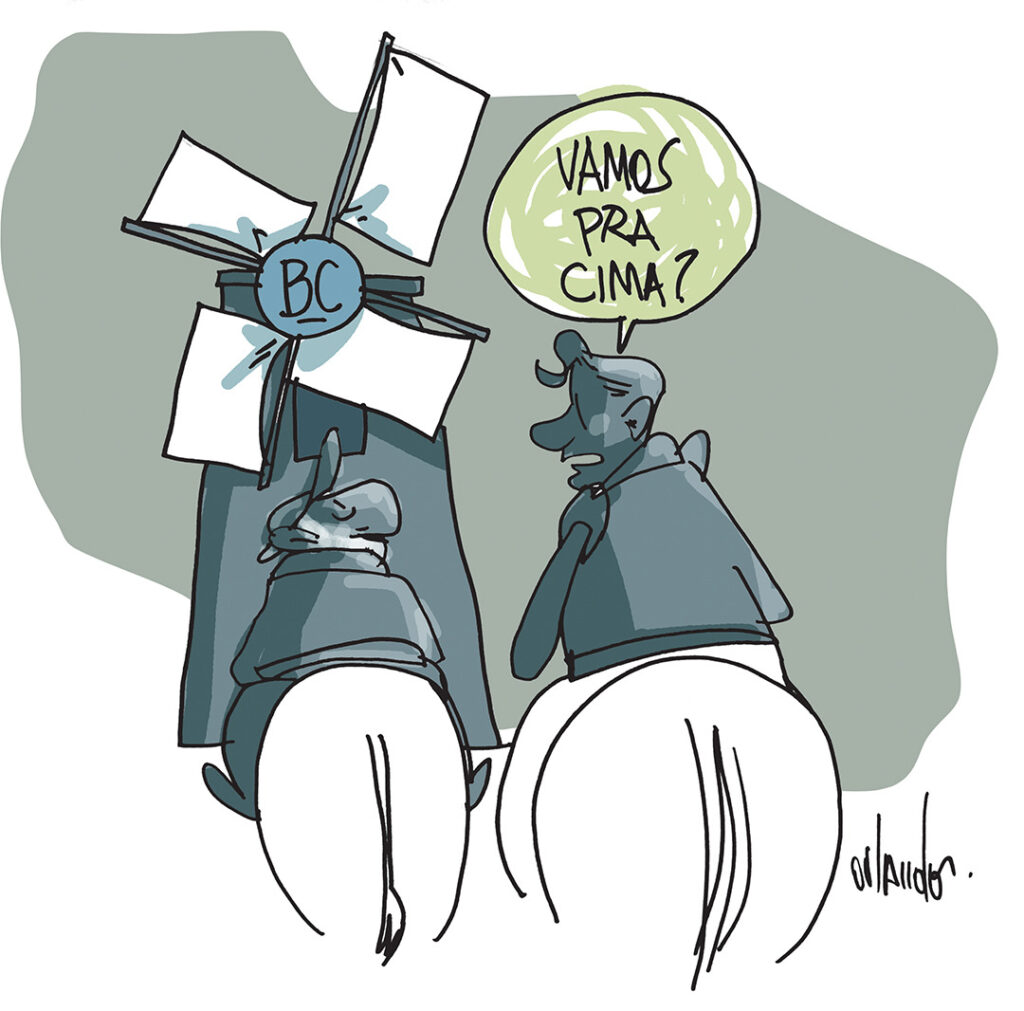
Paradoxically, the attack on the Central Bank's independence only reinforces the need for its independence. In a short time, it has already proven to be healthy. The mismatch between monetary policy and the political cycle mitigated greater damage to the economy last year, due to the fierce electoral dispute. Did Lula believe that, one month into his administration, the Monetary Policy Committee would lower the basic interest rate simply because there was a new government? But then why this aggressive stance by President Lula? Some will say that he is looking for a "scapegoat" because he knows that the economy will not grow as expected this year, which would cause a lot of damage to the government's popularity, an essential tool for clashes with Congress. Others say it is a way of putting pressure on the Central Bank, which has already softened its tone in the published minutes, and that the Minister of Finance would act in opposition to President Lula, in a classic game of push and pull. The fight is with high interest rates and not with the independence of the Central Bank. Revising the law that approved it would generate so much political wear and tear that it could be said to be unfeasible.
No one disagrees that interest rates are too high. Brazil has the highest real interest rate in the world. It is time to lower it. It is understandable that market agents are causing panic by claiming that strong fiscal adjustment is necessary, since these same agents are the ones who benefit from high interest rates, as evidenced by the recent results of Banco Itaú. But what is surprising is the lack of response from the business community in this debate. They are the true productive agents and are penalized by high interest rates, yet they have not joined President Lula in his chorus. Amid this confusion, what should happen at the next Copom meeting? If interest rates are lowered, it may seem like submission to pressure. On the other hand, if it does not fall, it will give the impression that the Central Bank president's pride has been hurt. What is the solution, then? The resignation of the Central Bank president? If this is the solution, the press is buying into President Lula's wishes, as there has been no other talk for over a week. Lula will have shown himself to be a strategist.
The government has signaled increased spending and investment, which is important for the country because it stimulates economic activity, which, when expanding, increases consumption of goods and services, employment, and income. But at the same time, it requires a program to contain the public deficit, which is still unknown. Hence the importance of aligning interest rate policy with the government's economic policy, with a view to facilitating the approval of the fiscal adjustment program in Congress. The risk of misalignment is that the basic interest rate set by the Central Bank affects the increase in Treasury spending on debt servicing, which would result in a more rigid fiscal adjustment, with difficulty in obtaining approval by Congress and, consequently, erosion of the Federal Government and President Lula's popularity.
Criticism of high interest rates is justified, but it cannot threaten the autonomy of the Central Bank.
Nominal interest rates are indeed high (13.75%) and any criticism of this figure is justified. But criticizing the independence of the Central Bank is another matter entirely. After all, this autonomy does not give it the right to do whatever it wants. The Monetary Policy Committee (Copom) has to make its decisions in line with the targets set by the National Monetary Council (CMN), including the inflation target. The CMN is currently composed of the Minister of Finance (Fernando Haddad), the Minister of Planning and Budget (Simone Tebet), and the President of the Central Bank himself (Roberto Campos Neto). Thus, the President of the Republic can focus his actions on the National Monetary Council so that it sets its targets in line with the economic objectives of the Federal Government, which will influence Copom's decisions.
It is too early to make any assessments of the new administration, especially since the legitimate concern during this first month has been the attacks on democracy. However, the president will need skilled negotiators to avoid unnecessary friction. From a political standpoint, President Lula's attacks may be having the desired effect of forcing negotiations between the president of the Central Bank and the Minister of Finance, but it is not expected that President Lula will continue to wear himself out in order to make his government policies viable. After all, he has assembled a cabinet with many political leaders who should publicly support him in this crusade against high interest rates. Turbulence creates winners and losers, but society will certainly not be among the beneficiaries of a confrontational president. It is worth remembering Lula's own campaign mantra: "credibility, predictability, and stability."
More about
Economy


