



“An optimist may make mistakes, but a pessimist is flawed from the outset.” Juscelino Kubitschek
Popular wisdom posits that “an idle mind is the devil's workshop,” or that “idleness is the mother of all sin.” Generally, popular sayings are not products of empirical studies that validate them, but rather of socio-temporal perceptions of specific behaviors that guide a given society. And society associates idleness with pessimism.
I do not imply that Schopenhauer, widely regarded by literature and historiography as the preeminent pessimistic metaphysician of all time, was unproductive. On the contrary, he, who posited this to be “the worst of all possible worlds” and outlined a manual of rules for the “art of being happy,” was highly prolific in literary works. Yet, the fact remains that across all his writings, he employed the term 'pessimism' only three times to directly refer to his own doctrine.
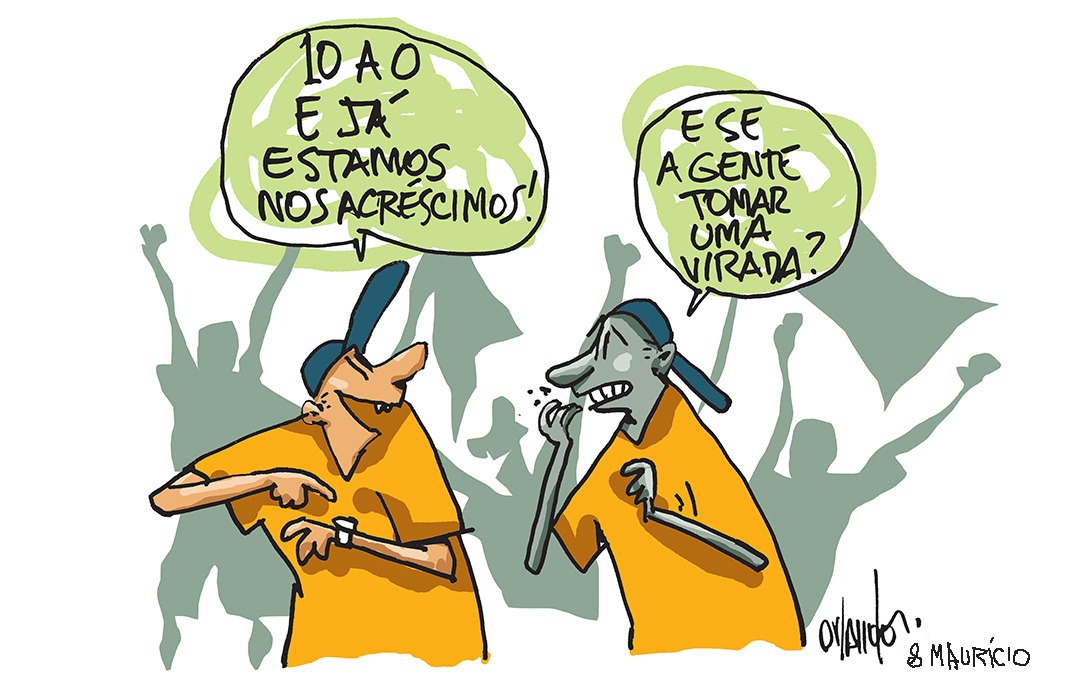
The term pessimism is generally understood in philosophical discourse in an ontological sense, meaning it characterizes worldviews whose cardinal principles deem “non-being” preferable to “being.” A pessimist is, so to speak, an individual who avoids risk, entering the field already conceding defeat. This represents the idleness stemming from the cowardice of inaction.
A pessimist is, by definition, a determinist, one who believes that all outcomes are predetermined and destined for failure. An optimist, conversely, is a consequentialist, one who believes that events are the consequence of their actions and are, therefore, amenable to control. The optimist is hopeful, aspiring to the best for themselves.
Hope is a unique characteristic of human beings.
It is no coincidence that the celebrated Italian humanist writer Dante Alighieri, in his masterpiece The Divine Comedy”, describes the inscription at the gates of hell as 'lasciate ogni speranza, voi che’ entrate' (abandon all hope, ye who enter), for hope is a fundamental characteristic of the human soul.
The passive outlook of the pessimist is antithetical to human creativity, which necessitates the combination of effort and hope. Effort to accept errors as attempts. Hope, for there is genuine belief in success.
The German philosopher Karl Marx, in describing the relationship between freedom and creativity, posits that the finest spider will always be inferior to the least skilled weaver, for the latter possesses something the spider does not: the capacity to create. The spider spins unbelievably beautiful webs because it has a congenital flaw: it is born with innate knowledge. Consequently, it weaves the same web as its mother and grandmother did, remaining perpetually repetitive and devoid of creativity.
Creativity emerges when the confines of sameness are breached. Therefore, even the most inexperienced individual can always acquire new knowledge. And learning necessitates effort, hope, and subsequently, an optimistic outlook on achieving mastery.
But why is creativity important? Because this dimension represents an expression of freedom that, through the act of innovation, can transform us. Anyone can be creative. Anyone can develop through creative endeavors. Creativity is not an elitist concept; it is accessible to all. I am dismayed when individuals abandon efforts before trying, believing themselves uncreative, thereby avoiding risk and retreating. Every creative act inherently involves a degree of risk. Those who refrain from creative pursuits due to fear of failure ultimately experience a diminished existence. Albert Einstein posited that individuals lacking the capacity to marvel at the world, at the mystery of existence, are akin to candles that have been extinguished.
The creative act distinguishes us from other animals because we possess the ability to deviate from the "code" of our inherent nature, i.e., the monotony inherent in the routine of survival. A pessimist will never be creative, as their essence is defined by "non-being," "non-action," "non-exposure," and "non-production." Consequently, they are ineffectual.
More about
Behavior


