



Today, sustainability is discussed with a solemnity that often masks the stark realities of economic facts. In global forums and boardrooms, the acronym ESG is reiterated as an ethical commitment, yet the astute observer recognizes that the current landscape demands less rhetoric and more substance. What we are witnessing is not merely a shift in values, but a necessary reconfiguration of the market itself. Sustainability has transitioned from a marketing embellishment to the new frontier of strategic realism.
Historically, economic systems are driven by the pursuit of predictability and security. As Hans Morgenthau observed, norms and discourses often serve to organize power relations and render them functional for society. In the current context, the environmental agenda plays this role in a sophisticated manner; it is the technical language that defines who will access long-term capital and who will be left behind. Capital does not merely seek virtue; it seeks continuity. In this regard, sustainability without metrics loses its function, and metrics without transparency compromise investor confidence.
The current challenge is to ensure the resilience of institutions in the face of climatic, legal, and geopolitical transformations. We are transitioning from a phase of voluntary initiatives to an imperative of necessary compliance. On the corporate chessboard, ESG should be regarded as the most advanced form of risk management. Companies that grasp this logic are not merely responding to external pressures; they are building a governance infrastructure that safeguards them against reputational crises and future instabilities.
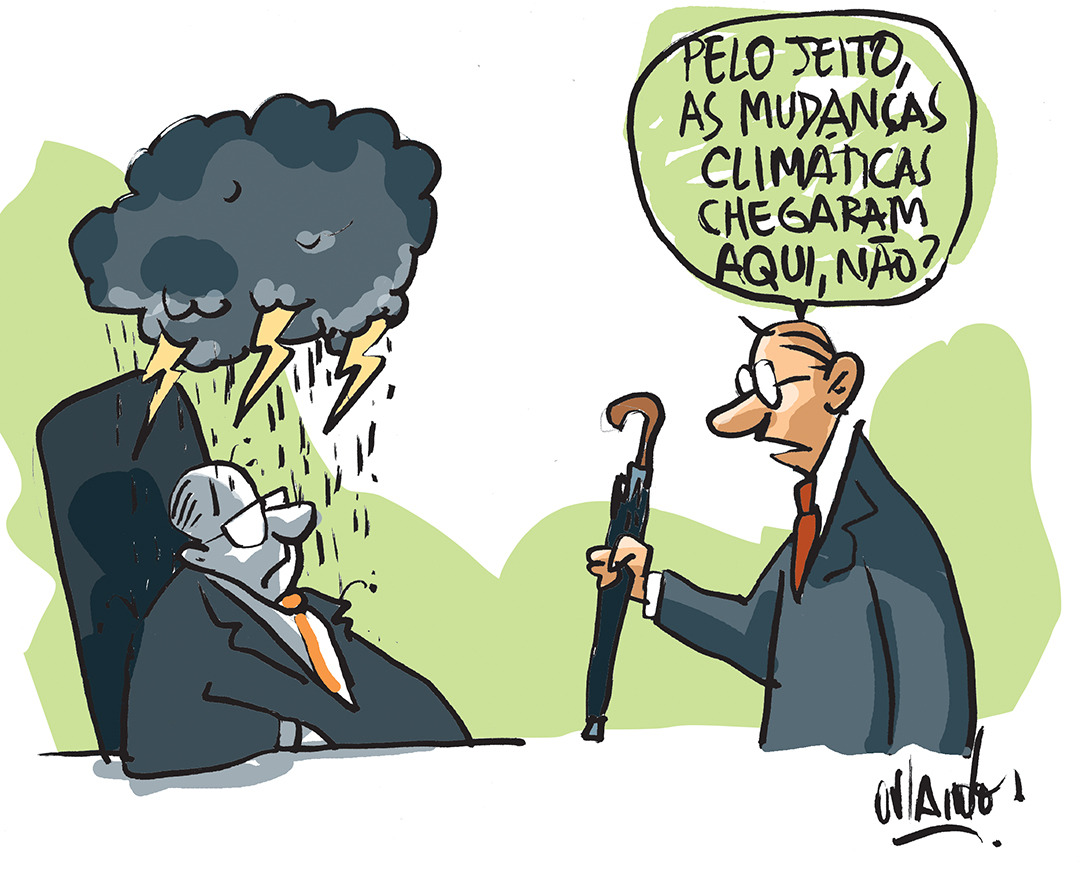
The Geopolitics of Capital and Risk Management
The movement of capital serves as the most accurate indicator of reality. While public discourse often devolves into ideological polarizations, global financial flows for 2025 reveal a pragmatic rationalization. In the past year, global sustainable funds recorded massive net outflows totaling 84 billion dollars. This data does not signal the demise of the sustainable agenda, but rather the cessation of tolerance for superficial outcomes. The market is now prioritizing assets that demonstrate technical compliance and robustness, eschewing promises lacking material evidence.
In Brazil, the scenario presents an interesting strategic evolution. By July 2025, sustainable funds in the country had reached a net asset value of R$ 36.8 billion, marking a 48.4% increase compared to the previous year. For investors operating in the Brazilian market, sustainability is perceived as a survival asset. Approximately 88% of institutional investors have increased their utilization of ESG information in their analyses, demonstrating that these criteria are now standard risk assessment tools.
This reallocation is not driven by philanthropy, but by a logic of value preservation. As posited by Game Theory, strategic cooperation centered on sustainability standards is the most effective method for maximizing outcomes in uncertain environments. Sustainability is, therefore, the new cornerstone of competitiveness. Integrating these factors into the core of business operations is not an ancillary choice; it is the critical decision that ensures a company's continued relevance in a market increasingly stringent regarding transparency and efficiency.
The Empire of Compliance and Business Security
If sustainability is the trajectory, then regulation is the track that ensures operational security. The transition to mandatory compliance represents the most significant phenomenon in modern management. In Brazil, CVM Resolution 193 mandated that publicly traded companies disclose sustainability reports based on international standards. This change redefines leadership accountability, as what was previously a statement of good intentions is now an auditable document, subject to regulatory scrutiny and administrative liability.
Internationally, the stringency is even more pronounced, creating tangible barriers for entities lacking full traceability across their supply chains. The European Union, through its Deforestation-Free Products Regulation (EUDR), mandates precise georeferencing to verify the legal origin of production. It is estimated that this legislation could impact up to 34% of Brazilian sales to the European bloc, thereby transforming environmental compliance into a concrete market barrier. Leaders who disregard these directives render their organizations vulnerable to severe trade exclusions.
Although adaptation necessitates investments and new processes, 70% of Brazilian companies already recognize that the ultimate benefit is the strengthening of governance and increased transparency. The landscape is complex and demands are escalating, but the alternative is irrelevance in the global capital market. As Max Weber observed, the ethic of responsibility demands that one considers the foreseeable consequences of one's actions. In the current corporate scenario, sustainability is the technical and strategic response to this responsibility.
The Pathology of Greenwashing and the End of Appearances
Greenwashing, the practice of masking reality with hollow rhetoric, has evolved from a mere reputational issue into a severe financial risk. The market penalizes inconsistency when it compromises investment integrity. In 2024, Invesco Advisers agreed to pay a $17.5 million fine for misleading statements regarding the integration of ESG factors into its assets. A similar precedent was established in Australia, where Vanguard was fined nearly $13 million for deficiencies in its investment screening processes.
In Brazil, the crackdown on misleading advertising is tightening with CONAR's new Annex U, which mandates technical substantiation for any sustainability claim in advertising. The era of subjective declarations has ended; proven transparency is now the norm. Reputational risk directly translates into market value fluctuations. Studies indicate that brands like Tesla could face billion-dollar drops in value if they fail to align public perception with more robust governance performance. Conversely, companies that deliver results exceeding expectations reap dividends in credibility.
Ultimately, ESG should not be viewed as a legal obligation, but rather as the strategic intelligence underpinning modern business strategy. The 74% growth in B Corp certifications in Brazil in 2024 demonstrates that leaderships are seeking impact methodologies that can be audited and measured. The higher survival rate of these companies demonstrates that sustainability serves as the optimal hedge against systemic crises. The future belongs to those who offer the assurance of technical veracity, ensuring that present success does not compromise the viability of future generations.
More about
World


