



The CIA, in the United States, is responsible for collecting and analyzing foreign intelligence information to advise the government on national security issues, which includes obtaining data on potential threats, assessing risks, and providing analysis to support policy-making. In addition, the agency also conducts covert operations and collects information related to national security. It is an important agency for the security and defense of the United States.
In the United Kingdom, this responsibility falls to MI6, whose role is to gather information on external threats to national security, i.e., to operate globally with a focus on international issues, espionage, and counterespionage. This is equally fundamental to decision-making on foreign policy and national security issues.
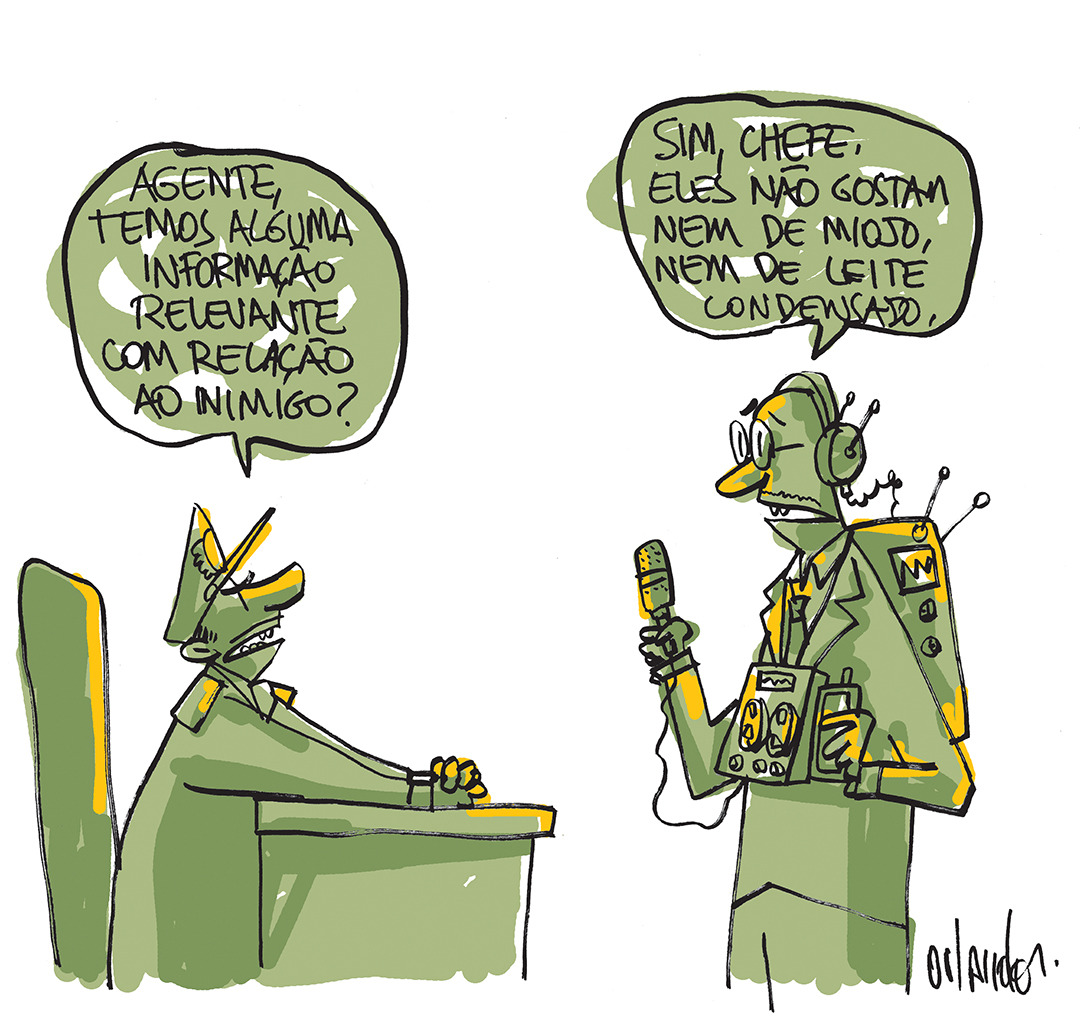
In every other corner of the world, intelligence agencies basically play a role in protecting national interests, as is the case in the US and the UK. Except in Brazil, where it is interesting to note the peculiarity of the focus of our intelligence agencies compared to their foreign counterparts.
While these foreign agencies focus their efforts on external threats, Brazilian agencies have historically preferred to direct their attention inward.
An emblematic example of this dynamic is the trajectory of DOI-CODI during the military dictatorship. Initially established as an instrument of political repression, it was responsible for planning security and intelligence operations, but in practice this included arrests, investigations, and interrogations of suspects—to say the least—until it was abolished at the end of the Figueiredo administration. The same happened with the SNI (National Information Service), the dictatorship's main espionage agency against "communist threats," which was abolished by then-President Collor when he took office and replaced by the Intelligence Department of the Secretariat for Strategic Affairs (DI/SAE). This department was elevated to the status of Undersecretariat of Intelligence (SSI) and in 1999, during the FHC administration, the ABIN (Brazilian Intelligence Agency) was created, carrying out operations that were the responsibility of the former SNI, indicating a continuity in the focus on internal monitoring.
It is necessary to question the balance between protecting citizens and preserving individual rights in a context where threats appear to be predominantly internal. ABIN's role in providing strategic information to the government must be closely monitored to ensure that its actions do not compromise the democratic principles that shape Brazilian society.
And just to mention an episode from our collection of anecdotes, Collor's abrupt dismantling of the SNI itself has its own episode circulating in the corridors of history: while still a presidential candidate, Collor was reportedly kept waiting for hours by a general with whom he had requested a meeting, and that—and only that—was the reason for the SNI's extinction. In fact, what most threatens Brazil externally is still within it, given the damage caused by Operation Car Wash, which destroyed national companies to the benefit of foreign competitors.
More about
Politics


