



Note to the reader - This is the second article in a trilogy on power and institutions in Brazil. In the previous text, we discussed how politics is, by nature, a tough and realistic game. If you have not yet read it, I invite you to access Part I before proceeding. In this second installment, we will demonstrate that acknowledging this realism does not imply accepting the unlimited exploitation of constitutional rules, which risks a silent democratic erosion.
If the first part of this analysis demonstrated that politics is inevitably a tough game, it is imperative to establish the boundary: there is a decisive difference between intense political strategy and cumulative constitutional instrumentalization. Contemporary literature on democratic collapse clearly indicates that modern democracies do not perish solely through military coups but rather degrade from within. As Steven Levitsky and Daniel Ziblatt have demonstrated, erosion occurs when elected leaders utilize legal mechanisms to gradually expand their power, transforming institutions into tools for excluding adversaries.
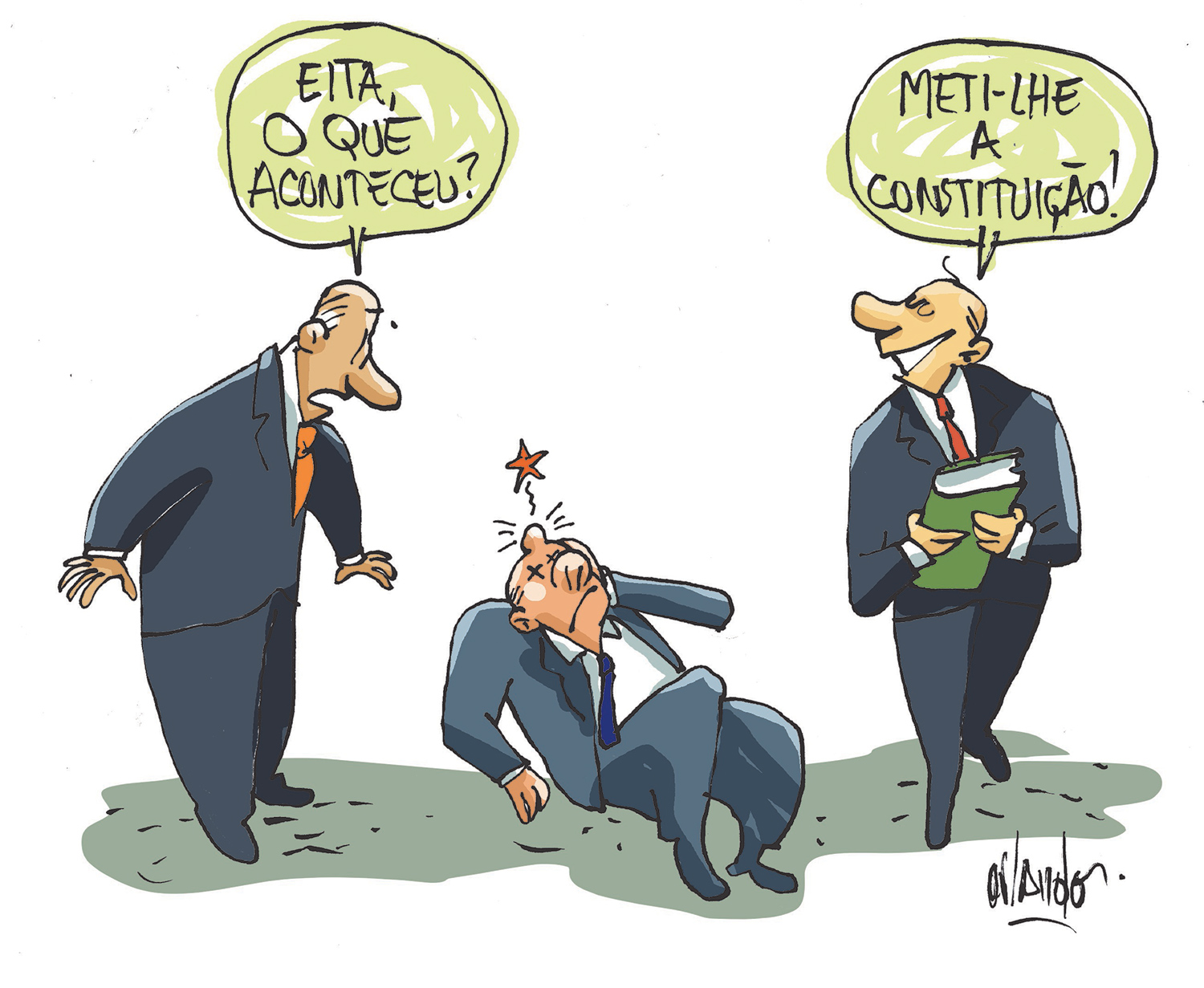
There is no visible rupture, but rather a continuous reinterpretation of norms. The phenomenon is global and has clear echoes in Latin America, resembling the extreme use of executive prerogatives observed in the United States and the judicial reforms in Hungary and Poland, conducted under the guise of formal legality. In all cases, the justification is the same: 'it is constitutional'. In Brazil, the 1988 Constitution was designed with an architecture that expanded judicial control, broadened rights, and strengthened oversight mechanisms — a structure that proved virtuous and essential in the context of redemocratization. However, this very elasticity, when systematically exploited as a tool for political combat, generates severe collateral effects.
Symptoms of Institutional Erosion
The systematic exploitation of constitutional limits engenders three primary effects that compromise the regime's integrity. The first is the informal displacement of power, where decision-making centers migrate without explicit alteration of the constitutional text, but through procedural and interpretive maneuvers. The second lies in the creation of cumulative precedents: each institutional innovation pushes the boundaries to legitimize the next, creating a spiral where what was once an exception becomes the norm. The third is the erosion of trust, where judicial and parliamentary decisions are increasingly perceived merely as strategic ploys, thereby divesting institutions of their moral authority.
In this scenario, excessive judicialization transforms any political defeat into an endless legal battle, thereby disenfranchising the popular vote of its ultimate authority. The budget ceases to be a planning document and becomes an instrument for structural power rearrangement, while constitutional amendments evolve into ordinary tools for momentary political accommodation. Individually, none of these elements disrupt the order, but their cumulative effect alters the very nature of the democratic regime. Robust democracies rely on an invisible yet vital element: the self-restraint of its actors. When this self-restraint is abandoned, the Constitution's moderating function weakens. Constitutional hardball does not immediately dismantle the regime; it silently erodes it, rendering it vulnerable to external shocks and extreme polarizations. The true risk does not lie in the triumph of a specific power, but in all actors consistently operating at the extreme limits of the rule of law.
More about
Politics


