



“Evil deeds do not surprise us any more than good deeds. Human stupidity, however, always amazes us.”
Albert Camus
Each passing day reveals further atrocities and crimes committed by the Lava Jato prosecutors, led by former judge Sergio Moro.
Last week, Novonor, Odebrecht's new name, filed a request with the Federal Supreme Court (STF) to annul the fine established in its leniency agreement, following a similar decision already granted by the STF in the J&F case. The request is likely to be granted, as the argument used by J&F to obtain a favorable decision was the threats and constraints suffered by Odebrecht itself.
In its request to overturn the fine, Novonor lists a series of transcripts of messages exchanged between Lava Jato prosecutors and former judge Moro, which make anyone want to vomit. The prosecutors force collaborators to change lawyers because they are "too combative" and thus influence the defense of the defendants, in addition to making clear threats to the company, its executives, and their families. At one point in the conversation, they consider arresting someone close to a collaborator to force him to change lawyers. They also consider arresting the owner to break the company once and for all. This is only part of the material that has been made available.
Without claiming to be exhaustive, the crimes committed by the Lava Jato prosecutors, as disclosed so far, include: illegal wiretapping in prison, illegal wiretapping of lawyers, blackmail to change lawyers, threats of imprisonment of family members, illegal arrests, mandatory waiver of defense in court proceedings, failure to comply with court orders, leaking confidential information, disclosure of illegal wiretaps, lawfare, illegal coercion, criminal organization, threats to murder a Supreme Court justice, illegal obtaining of information from abroad, administrative impropriety, and abuse of power. The list continues to grow. They are tenants of the penal code. They are guilty of almost every crime listed in the code.
With all this in mind, we still find those who downplay these crimes. Some are card-carrying fascists. But it is astonishing how part of the mainstream media (supporters of the 1964 coup) still "turns a blind eye" and resents the end of this dark chapter, which was the embryo of the attack on democracy on January 8, 2023. They call these crimes slips, deviations, mistakes, abuses, as if to attribute little relevance to them.
The newspaper O Globo, for example, published an editorial on the 17th of this month entitled "There should be no forgiveness for Odebrecht fines." In the text—note the paradox—it argues that "if the justification is questionable for J&F, using it for Odebrecht would be completely out of place." How so? The argument used by J&F to obtain the cancellation of the fine was the constraints imposed on Odebrecht—the company most affected by the torture of the Curitiba republic.
To those who argue that the ends justify the means, I remind you that throughout history we have seen countless cases of crimes committed in the name of noble causes. Wars, genocides, and oppression have occurred under justifications such as nationalism, religion, or political ideologies.
These tragedies highlight the legal, moral, and ethical complexity that arises when noble principles are distorted to justify unacceptable acts.
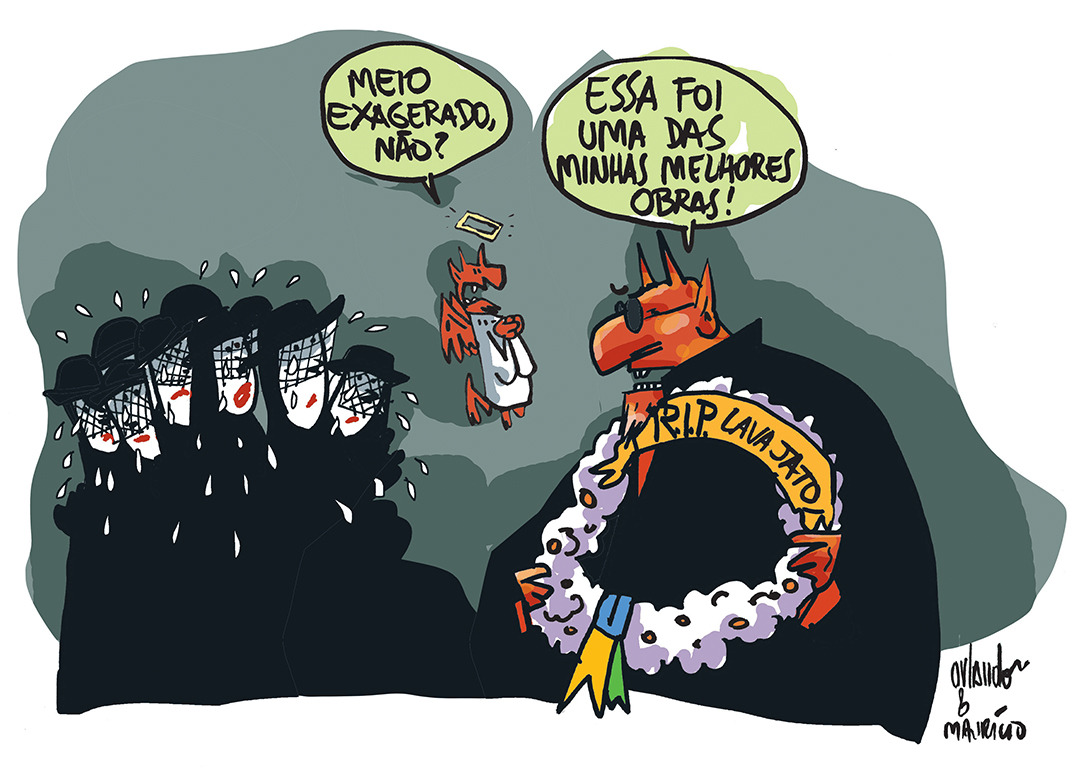
In the case of Operation Car Wash, it is already clear that the supposed fight against corruption was the justification for the project of power and enrichment of its members with the support of part of the media, and it brought much more harm than good to the country.
A report by the Institute for Strategic Studies on Oil, Gas, and Biofuel (INEEP) points out that in its first year alone, Operation Car Wash removed approximately R$ 42 billion from the Brazilian economy, promoting the "dismantling of important sectors of the national economy." Economists unanimously agree that Operation Car Wash has increased unemployment in the country. The shipbuilding industry alone lost more than 50,000 jobs. Odebrecht alone reduced its workforce from almost 200,000 to just under 30,000. Furthermore, the amounts to be returned to Petrobras, around R$ 6 billion, are nothing compared to the fine that this company paid in the US court of around US$ 3 billion. In other words, the operation, which turned out to be the biggest corruption case in the judiciary, shook the Brazilian economy, generated high levels of unemployment, and culminated in high payments to the Americans.
The past conduct of the Brazilian business and political sectors needs to be reexamined and framed in the correct light of a practice that is no longer tolerated, and the State needs to correct its mistakes and omissions.
Novonor and the other companies affected by the coercion have an obligation to expose the atrocities to which the company and its executives were subjected. The request to annul the fine is a natural consequence of a flawed agreement. You cannot annul something that is already null and void at its origin.
More about
Politics


