



“There are so many fools commanding intelligent men that sometimes I think stupidity is a science.” Antônio Aleixo
In times of tax reform, where creativity is sought to increase revenue and improve fiscal balance, the government has employed various stratagems to maximize revenue collection. It has unearthed a tax simplification project, interfered with the balance of CARF, and launched a crusade to tax the wealthy. This treasure hunt agenda could be enhanced with more creativity. I suggest taxing stupidity.
Contingent upon the applied tax rate and considering the global prevalence of intellectual mediocrity, I project an additional revenue of billions of reais for public coffers. This, incidentally, compels me to adapt Abraham Lincoln's renowned adage: “God must love stupid men (mediocre, in the original). He made so many of them.”
I am not referring to the uneducated, the ignorant, or those with cognitive impairments or special conditions. These individuals are victims of policies that fail to prioritize foundational education, leaving less privileged populations to their own devices in seeking minimal schooling.
I refer to classic stupidity, which, in the words of Italian historian and economist Carlo Cipolla, “is that which causes harm to another person or group of people, without gaining any advantage for oneself, or even incurring self-detriment.”
Stupidity possesses the inherent characteristic of manifesting in actions, thereby rendering it perilous. Even intelligent individuals tend to underestimate the risks intrinsic to foolishness. It is more dangerous, for instance, than cruelty, as cruelty operates with a discernible logic and can thus be confronted. In the words of Nelson Rodrigues, “What can be done against stupidity? I suspect no possible recourse exists.”
The new tax is democratic, as it impacts the affluent, the impoverished, men, women, asexual individuals, transgender individuals, and the entire LGBTQI+ spectrum, irrespective of race or creed.
To define the incidence element of the new tax on stupidity, the following characteristics will be observed:
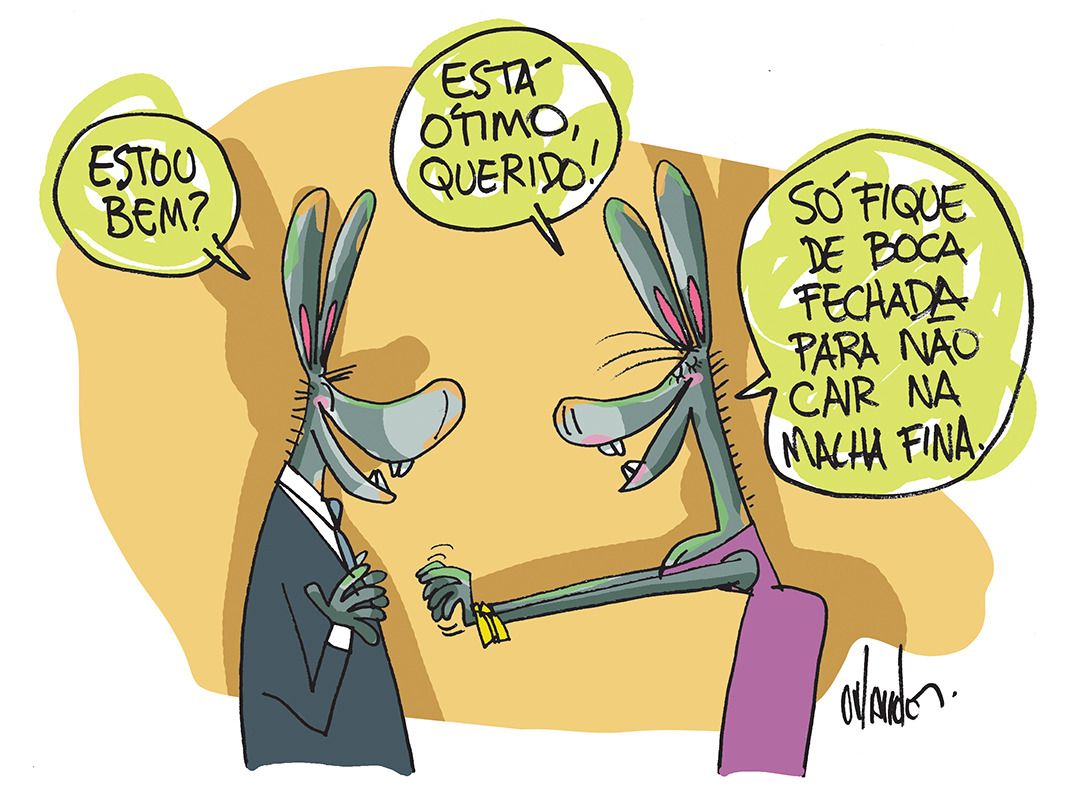
1) Stupidity is recurrent: the foolish individual frequently reiterates the same error. They fail to acknowledge their own limitations, remain inert in their convictions, and resist change. Italian psychologist Luigi Anolli often states that “in the clinical context, stupidity is the most severe ailment, as it is incurable.” The foolish individual repeats their folly due to an inability to comprehend the damage inflicted and, consequently, cannot self-correct;
2) Folly is contagious: crowds exhibit lower cognitive capacity than isolated individuals. This explains why entire populations can be readily conditioned to pursue irrational objectives, a phenomenon well-documented in psychology, as the emotional contagion within a group diminishes critical faculties. According to Anolli, 'decision-making polarization is observed';
3) Folly often occupies positions of command: 'Power dulls the intellect,' asserts the German philosopher Friedrich Nietzsche. According to the philosopher, individuals in positions of power perceive themselves as superior, more capable, and more intelligent than others, and commonly surround themselves with sycophants and opportunists who reinforce this delusion.
We all possess a greater degree of folly than we imagine, which is why this 'tax' would encompass a broad range of contributors. It leads, for instance, a President of the Republic to disregard scientific studies because they do not align with their viewpoint; King Louis XVI, on July 14, 1789 (the date of the fall of the Bastille, an event that initiated the French Revolution), to write in his diary: 'Today, nothing new'; or Napoleon Bonaparte to attack Russia in the dead of winter in 1812; or even to the collective masturbation of medical students at a renowned Brazilian university.
Scientific studies conclude that it is possible to discover that we are somewhat foolish, but the brain operates in a way that conceals this reality from us. Statistics indicate that 50% of drivers are incompetent, yet they remain unaware of this, otherwise they would utilize public transport and enhance their chances of survival. Nevertheless, 80% of individuals hospitalized due to car accidents believe they belong to the elite of drivers. The same example can be applied to helicopter piloting, the professional sphere, the football field, and so forth. It is no surprise that football team coaches are constantly 'bestowed' with the epithet of 'foolish' for failing to perceive what 70,000 people clearly observe.
The challenge to circumvent with this new taxation is that, upon acknowledging oneself as a taxpayer, one automatically recognizes a foolish act, and our ego and self-esteem do not readily accept this unwelcome guest. Thus, to prevent this tax evasion, the tax would fall under the rubric of 'tax on madness,' as it is known that we are more inclined to label ourselves mad, but never foolish.
Folly possesses a positive aspect in that it permits us to err, and within the experience of error, there is always an advancement of knowledge. Thus, the key to nullifying folly lies in recognizing one's own errors and correcting them. However, paying a modest tax for acts of folly would benefit public coffers and, consequently, society as a whole.
This tax tends to diminish over time. Let us consider: the greater the ignorance, the higher the tax, and the higher the tax, the greater the investment in education. Consequently, the greater the education, the lower future ignorance will be, thereby reducing the incidence of the same tax. Alternatively, for enthusiasts of the exact sciences, this can be represented by the following mathematical expression (where 'b' signifies ignorance; 'Imp' signifies tax, and 'Edu' signifies education):
b = Imp2 => Edu ... Edu > b
In this manner, society can leverage ignorance. In the words of the French writer Paul Valéry: “There is a fool within me. I must profit from his mistakes.”
More about
Politics


The Power of Those Who Lose

The Debate Nobody Wanted
Supreme Court Without a Chief Justice


