



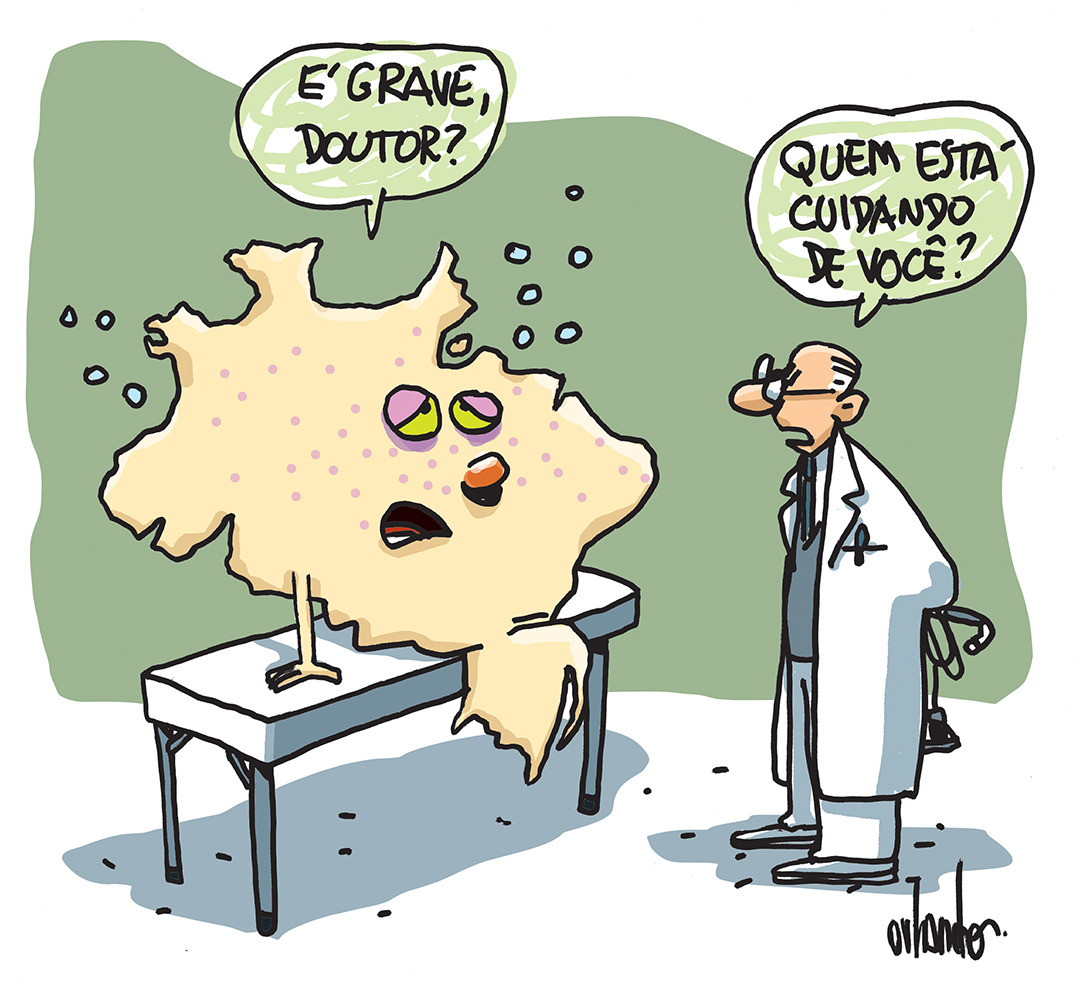
In recent weeks, a series of legislative measures have profoundly impacted the government: the return of the PIS/COFINS Provisional Measure, the Beaches Bill, the Abortion Bill, the 'Blusinhas' Bill, fiscal balance concerns, the perennial Petrobras dispute—whether regarding dividends or management changes—among others. All these developments have left the government on the defensive, lacking the capacity for effective political articulation. Compounding this, the current administration has faced significant communication challenges since its inception.
A portion of these legislative measures constitutes traps laid by Congress to undermine the Executive, thereby demonstrating the character of current legislators. However, part of this crisis is attributable to the government itself, which still falters in its political articulation and lacks a coherent plan.
Indeed, the narrow outcome of the presidential elections and the current composition of Congress necessitate the president's engagement with other parties to forge a minimally secure base and maintain governability, thereby consistently complicating the approval of legislative proposals.
Nevertheless, greater expectations are placed on this administration and President Lula's diplomatic acumen, as he appears to have overlooked the cultural transformation within national politics. The political landscape in Brasília during Lula's initial terms is no longer congruent with the present, and negotiation methodologies have similarly evolved. Whereas previously negotiations centered on the allocation of ministerial portfolios to forge an allied base, contemporary party loyalty is secured through individual project-based negotiations, irrespective of the number of ministries a party holds.
To enhance political articulation, Lula must surround himself with adept political strategists possessing credibility, competence, and autonomy in negotiation. Based on current observations, none of these three prerequisites are met by those tasked with congressional dialogue. Consequently, each week introduces a fresh challenge.
Churchill famously remarked that the U.S. invariably arrived at the correct policy after exhausting all other options; contemporary Brazil, however, suggests a perpetual cycle of testing alternative policies without certainty of ultimately identifying the optimal one.
On the economic agenda, which had been generating positive news and bolstering government credibility, the Minister of Finance faced intense criticism from both the financial market and the allied political base. This rendered the fiscal balance policy, predicated on increased revenue, no longer viable. It will now be imperative to implement a cost-reduction agenda, a subject the government has consistently sought to circumvent, but which has become unavoidable.
This year's municipal elections introduce an additional factor for diagnosing the government's popular approval, which has been eroding in recent months. Furthermore, the continued significant public support for the far-right, despite all revelations in recent years, accentuates the critical need to establish an appropriate political equilibrium.
The nation's political agenda is fractured not merely by the polarization of opinions, but by a fundamental shift in political methodology. President Lula must leverage his extensive experience, as his inner circle is failing to yield effective outcomes. The administration is faltering, which consequently weakens the nation. In the current global landscape, characterized by conflicts and economic and social uncertainties, being perceived as a weak nation engenders severe repercussions for social welfare and its democratic institutions.
More about
Politics


