



President Lula announced that he will not stick to the shortlist of three candidates for the position of Attorney General (PGR), whose term ends in September 2023. To the less attentive, it may seem that the president is being casuistic and will repeat what has happened in other cases, in which the attorney general acted in the "interest" of the incumbent president. It is also alleged that Lula himself chose members from the shortlist for attorney general during his two previous terms. Is Lula, then, being contradictory?
I can tell you right now that it won't. The damage caused by Rodrigo Janot's management of the Attorney General's Office still reverberates in the corridors of the courts. It is undeniable that Janot's sinister conduct destroyed the practice of using the triple list. Janot used the prerogative of his office to launch a relentless hunt for the country's political and business elite and, given the enormous media coverage, shifted to an agenda of self-promotion and public visibility, incompatible with the liturgy of his office and the care required in filing lawsuits, which he used as a vehicle for self-promotion. It is worth remembering that he himself confessed to entering the premises of the Federal Supreme Court armed to shoot one of the court's ministers and even instructed a businessman to wiretap the acting president of the Republic, which clearly defines his inability to hold the position. Janot was chosen and reappointed as a member of the triple list. President Bolsonaro himself, the biggest beneficiary of Janot's blunders at the head of the PGR, stayed far away from the triple list on the two occasions he had to choose the Attorney General of the Republic.
The truth is that Janot's administration destroyed the reputation of the triple list, and the courtiers of the prosecutors' associations did nothing to contain the disastrous actions of the then attorney general. On the contrary, they issued statements of support for the prosecutor. Now that the storm has passed, the error of the choice linked to that list is clearly apparent.
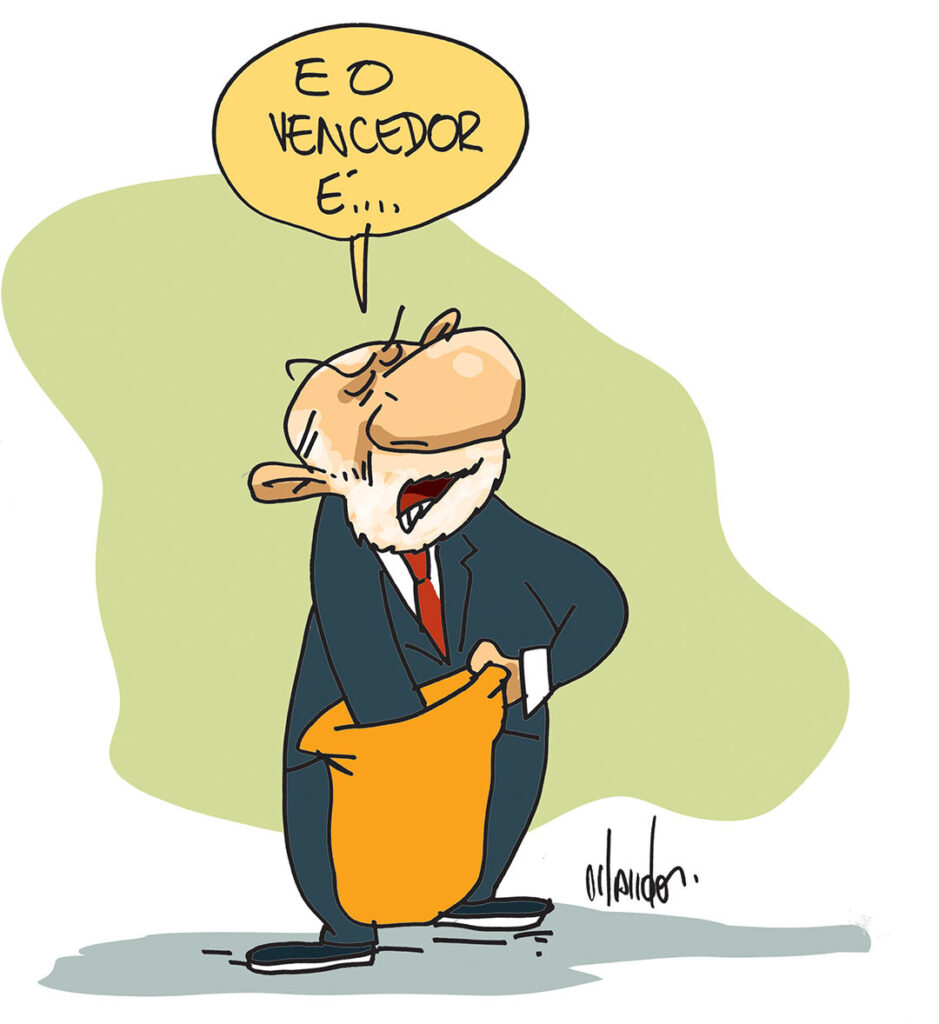
The triple list is not a requirement under the law. On the contrary, the Federal Constitution of 1988 determines in Article 128, paragraph 1, that the prerogative to choose the attorney general is exclusive to the president of the Republic, whose only requirements are to be a career member and over 35 years of age, after approval of his name by an absolute majority of the members of the Federal Senate, for a two-year term, with reappointment permitted. The National Association of Federal Prosecutors (ANPR) created the practice and coordinates the election of the triple list to propose names to the President of the Republic and maintains that this is the most democratic way to choose the top leadership of the federal public prosecutor's office. Unless established by direct election by society, this list will always represent the corporate interests of its members and not necessarily the interests of society. The argument that the position represents the state and not the government, and that the president should therefore necessarily limit himself to the triple list, does not hold water, since it is the president of the Republic who was elected by popular vote to represent the state. The ANPR represents corporate interests, and these cannot override the interests of the State. Under this argument, then, the heads of the armed forces should be appointed from a triple list coordinated by the high ranks of the armed forces. Can you imagine, in this delicate period of threats to democracy and the rule of law, if the armed forces were sovereign over those elected by popular vote?
The fact is that the solution is already provided by the Federal Constitution of 1988 itself. As former Supreme Court Justice Ayres de Brito reminds us, the solution is always in the Federal Constitution. One need only read it. Article 128 of the Federal Constitution, mentioned above, submits the nomination chosen by the President of the Republic to the approval of a majority of the members of the Federal Senate. Therefore, the nomination undergoes political scrutiny by another branch of government in order to take effect, creating the necessary balance to prevent harmful nominations by the President of the Republic. If the Federal Senate does not fulfill its function and only approves the name nominated by the President of the Republic, it is a failure of its members in the exercise of their functions. Changing the Federal Constitution or creating a different mechanism for choosing the Attorney General of the Republic is to recognize the unnecessary existence of the Federal Senate.
More about
Politics


