



Last Thursday, May 30, 2024, the United States witnessed an unprecedented event in its political history. Former President Donald Trump was convicted by a New York jury on all 34 counts of falsifying business records, related to a $130,000 payment to adult film actress Stormy Daniels to silence a matter during the 2016 election. While Trump could face up to four years in prison, it is improbable that he will serve jail time, potentially receiving lighter sentences. However, given the nature of American legal and electoral frameworks, which do not preclude individuals under investigation or convicted at any level from running for office, Trump can and is expected to contend for the presidency again. Furthermore, he has already garnered support from significant market figures and investors to continue his pursuit of the White House.
This article, however, will not delve into the guilt or innocence of the former Republican president. This development, coupled with other significant events in our own country, prompted me to reflect on the decisive role of the Judiciary in electoral processes worldwide. This is exemplified by how a conviction can significantly impact voter perception and a nation's political landscape. Even in the U.S., where there is no specific electoral court and all matters are decided in common courts, the Judiciary proves to be a powerful force in the electoral arena.
In the United States, the Judiciary's impact on elections has been escalating. Trump's conviction does not legally bar him from running, but the effect of this decision on voters and his campaign could be profound. Public confidence in the electoral system and candidate integrity is directly influenced by such judicial proceedings. This case underscores the increasing intersection between justice and politics, where judicial decisions can shape a nation's political future.
Comparatively, in Brazil, the Judiciary's role in elections is even more structured. The Superior Electoral Court (TSE) and the Clean Slate Law (Lei da Ficha Limpa) are specific mechanisms that regulate candidate eligibility. The Clean Slate Law, for instance, prohibits politicians convicted in the second instance for crimes such as corruption from running for public office. This instrument has been a cornerstone in the endeavor to maintain the integrity of the Brazilian electoral process.
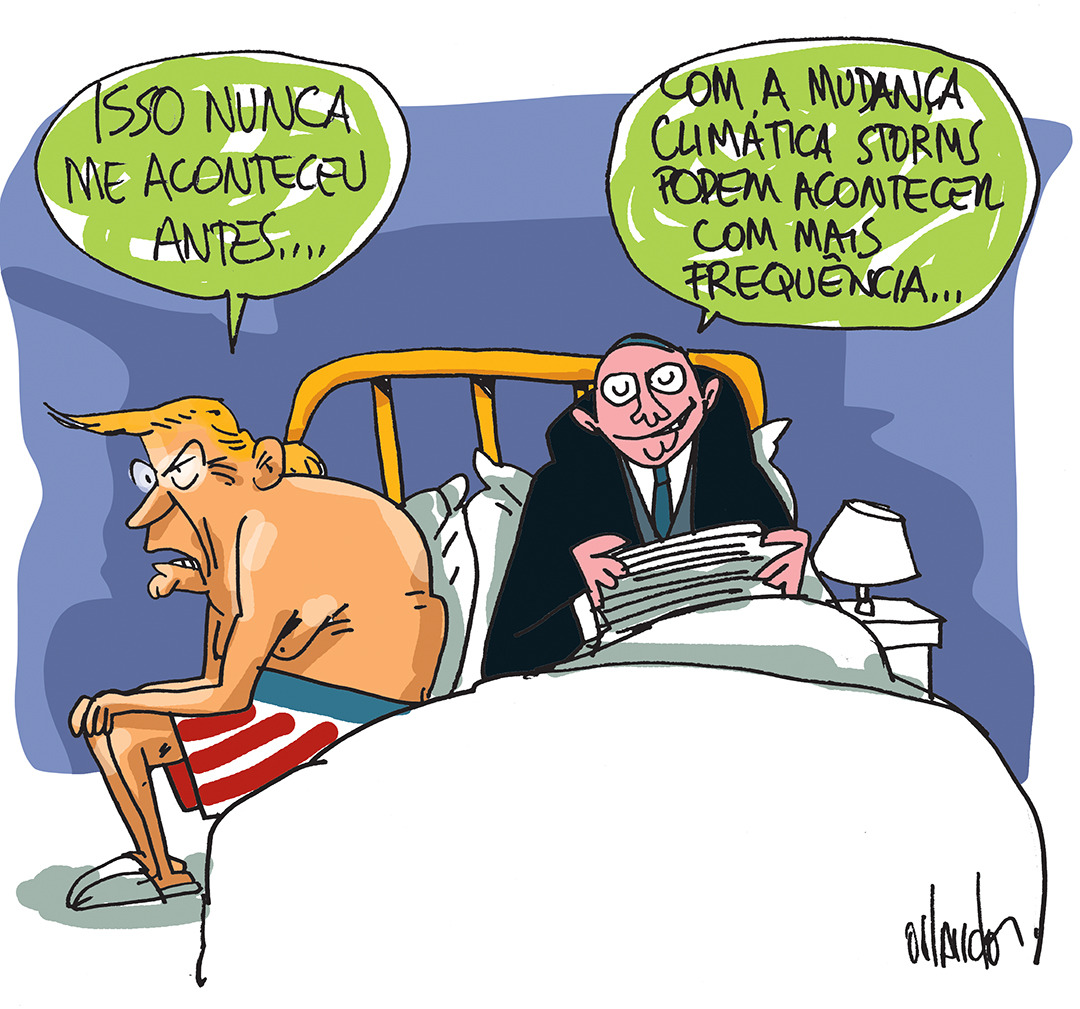
Historically, the Brazilian Judiciary has also had a significant impact on elections. The most notable example is that of Luiz Inácio Lula da Silva, who, due to a malicious interference by the Judiciary, was barred from running against Jair Bolsonaro in the 2018 elections following a corruption conviction. Conversely, Bolsonaro himself currently faces the suspension of his political rights, precluding his candidacy in upcoming elections. This suspension stems from convictions related to actions during his campaign and presidential tenure.
Both cases exemplify how the Judiciary can decisively influence a nation's political landscape. In the U.S., without a specific electoral court, and in Brazil, with a structured electoral judicial system, the Judiciary has become a crucial actor in elections. The Judiciary's function in ensuring legality and ethics in the electoral process is vital, but its increasing influence raises questions about the scope of its role.
Historical instances where the judiciary intervened to convict or preclude candidates from participating in elections are not uncommon. In Italy, for example, former Prime Minister Silvio Berlusconi faced multiple convictions that significantly impacted his political career. In South Africa, former President Jacob Zuma was also embroiled in various legal proceedings that affected his political trajectory. Even former American President Bill Clinton nearly had his career curtailed by impeachment. And, remaining in the U.S. context, there is the renowned Watergate scandal, where judicial pressure and the approval of impeachment led then-President Nixon to resign in the mid-1970s.
In light of these numerous events, whether in a more liberal culture like that of the U.S. or a more regulated one like Brazil's, it is evident that the Judiciary has become an instrument of influence in electoral processes. Regardless of whether Donald Trump runs or wins, it is clear that this conviction will have profound impacts on the American electoral process.
The significance of an active Judiciary in safeguarding electoral integrity is undeniable. However, it is crucial to assess the extent to which its involvement benefits electoral processes and the preservation of democracy. A balance must be struck to ensure that justice functions as a guardian of ethics and legality, without becoming an agent of political destabilization. The Judiciary must operate with impartiality, ensuring its influence consistently serves the interests of justice and democracy.
This is a tenuous boundary, particularly when numerous global leaders commit acts that create vulnerabilities for judgments and convictions. The precise calibration of judicial action in electoral processes remains ambiguous. Operation Lava Jato bequeathed yet another pernicious legacy: the instrumentalization of the judiciary to interfere in ongoing campaigns. Today, the "widows" of Lava Jato lament the judiciary's excessive interference, yet they enthusiastically applauded a corrupt judge and his acolytes when they altered the electoral landscape and sought to decimate the political class.
The pendulum of equilibrium is expected to return to the center over time, albeit at a significant social cost. The lesson to be learned is that radicalism, whether from the right or the left, engenders severe consequences for a nation's political stability. The political game must revert to being played on the political chessboard, distinct from judicial intervention. Judicial interference in campaigns has become a parallel process in the political sphere, impacting both pre-election and post-election dynamics.
More about
Politics


