



“Politics is the art of looking for trouble, finding it all over the place, making a false diagnosis, and applying the wrong solutions.” Groucho Marx
It is often said that politics is the art of swallowing frogs. In contemporary times, I assert that politics is the domain of farce, where truth is lost amidst the falsehoods of those who manipulate it.
Let's take, for example, the trial to impeach Senator Sergio Moro. There is debate as to whether the funds he used in the pre-campaign phase should be counted for the purposes of accountability and compliance with the legal limits on election campaign spending.
The thesis under consideration is of utmost importance, as it will guide the actions of candidates in future elections. In other words, when the TSE issues its final decision, we will know whether there are limits on electoral spending, or whether the door is open to fraud by unscrupulous politicians. The fact that this trial involves Sergio Moro sheds more light on the issue, as he is a despicable figure as both a judge and a politician.
When analyzing his political career, we see the same pattern of moral and legal dishonesty that he employed during his time as a magistrate. First, he used his judge's robe to try to destroy the political class. Then, breaking his promise, he abandoned his robe to enter politics and become a minister in a government he helped elect, demanding in return that he be guaranteed the position of Supreme Court justice. Seeing that the promise would not be fulfilled, he betrayed his allies with serious accusations of crimes committed by the then president in order to launch himself as a candidate for president of the Republic.
During the campaign, already polarized between two candidates, he backtracks on the public accusations he made and returns to being an ally of the government he so strongly criticized. He runs for the Federal Senate for São Paulo, abandoning his home state. His voter registration in São Paulo is revoked and he is forced to return to the state he had abandoned months earlier, betraying his political godfather to take his seat as senator. He is expected to be indicted by the Federal Police for embezzlement and misappropriation of public funds during his time as a federal judge. Now his accounts are being challenged and he is bleeding in the public square to the point that, for fear of being arrested, he is groveling for help from Gilmar Mendes, his greatest enemy and whom he has repeatedly called corrupt.
Thus, thanks to his successive farces and betrayals, he achieves a political feat: uniting the right and the left in a common cause, the impeachment of his mandate.
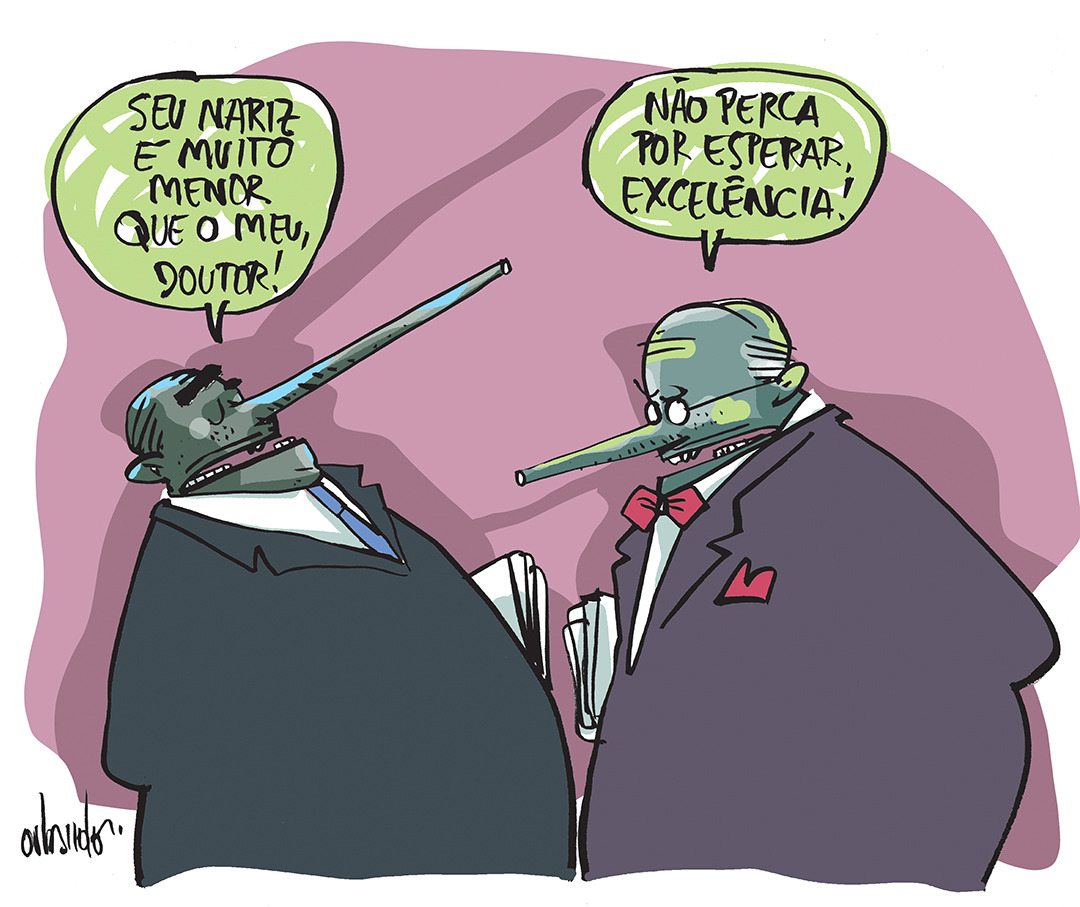
This quick summary of immoral actions clearly demonstrates the state of politics today. Unprepared candidates, front parties, bionic candidacies, fake news, embezzlement of campaign funds, fraudulent registration in non-existent electoral districts. There are no limits to the abuses of these malicious politicians. Electoral rules are a mess, and the poor moral and intellectual standards of politicians make the situation even worse.
Brazilian politics has undergone significant changes over the decades, and politicians such as Sergio Moro stand out as examples of questionable practices that have contributed to the decline in ethical, legal, and moral standards in the national political arena.
In previous decades, Brazilian politics was marked by intense ideological debates and leaders who, despite their differences, were committed to political and social ideals. Figures such as Juscelino Kubitscheck, Roberto Campos, Carlos Lacerda, Leonel Brizola, Franco Montoro, Tancredo Neves, and Ulysses Guimarães represented different political currents, but maintained a respect for democratic institutions and a commitment to their ideologies and the well-being of the population.
Over the following decades, the political landscape changed dramatically. The large number of political parties with little representation and the rise of the centrão, a group of political parties without ideology and characterized by pragmatic negotiations in exchange for political support, brought about a series of practices that undermined transparency and ethics in politics. The pursuit of public office and resources became a priority over the public interest, shaking the population's confidence in political institutions.
Demanding that current politicians change their ethical behavior and commit to the public interest seems like an unattainable goal, but it is striking how far from rock bottom Brazilian politics still is. Electoral justice must take action to put limits on these electoral farces.
More about
Politics


