



"Power is not an end, but a means to govern well." Socrates
With the presidential elections in Argentina having ended last Sunday, Javier Milei's victory over Sergio Massa confirms a pattern that has been consolidating in presidential elections in democratic countries: the evils of the present have overcome promises of the future, and the government machine has been losing importance in elections.
If we look at presidential elections in the Americas in recent years, we see a decline in long-term power retention. Once the greatest political asset, the government machine is no longer enough to win elections. The phenomenon of social media, combined with social and economic dissatisfaction at election time, is outweighing the political benefits of the government machine.
Milei, who defines himself as a libertarian, overcame two forces that have governed the country for the past two decades: Macrism and the Peronist-Kirchnerist coalition. He ran a campaign that was unthinkable by traditional standards. Looking like an unbalanced braggart dressed as a superhero, he ran a campaign that could be said to be aimed at children. With outlandish ideas such as dynamiting the Central Bank, adopting the US dollar as the standard currency, legalizing the sale of human organs, and revising the compensation paid for the military dictatorship in a country where there is social, academic, and judicial consensus regarding state terrorism and crimes against humanity, his victory seemed impossible.
However, Milei's victory highlights the growing demand for change and for non-traditional political figures, which points to voters' desire for leaders who are more attuned to the concerns and needs of the population and for profound change. They use people's anger and sense that their lives are getting worse to establish their discourse of change. In Argentina's case, the perception that there is an increasingly wealthy political caste, while the people are becoming poorer, catapulted Milei to victory.
If we compare this with Bolsonaro's victory in 2018, we see some interesting parallels. Both were elected as outsider candidates who presented themselves as agents of change, promising to break with the existing political system. They attracted dissatisfied voters, using nationalist rhetoric and proposals for profound and radical change, and making extensive use of social media. They are colorful characters who appeal to less politicized and less engaged voters, who were not detected by polls or the political establishment.
Both Milei and Bolsonaro were weak candidates in terms of content and professionalism, incapable of managing a bakery. This weakness, however, was used to their advantage. Bolsonaro in the episode of the stabbing that almost killed him, and Milei for his shameful role in the electoral battle. Both won the sympathy of voters.
South America is divided between the right and the left, with a slight predominance of the left, represented by Brazil, Chile, Bolivia, Colombia, Venezuela, Guyana, and Suriname. The right has been growing with victories in Argentina, Ecuador, Paraguay, Peru, and Uruguay. What stands out is the constant alternation of power.
If we analyze the electoral period from 2019 to 2023, we will find a vast change in political positions in the region. In Argentina, Alberto Fernandez (left) was replaced by Javier Milei (far right); in Brazil, Jair Bolsonaro (radical right) was replaced by Lula (left); in Chile, Sebastian Piñera (right) was replaced by Gabriel Boric (left); in Colombia, Ivan Duque (right) was replaced by Gustavo Petro (left); in Ecuador, Lenín Moreno (left) by Daniel Noboa (right); in Bolivia, Jeanine Añez (right) by Luis Acre (left); in Peru, Martin Vizcarra (right) by Dina Boluarte (left); in Uruguay, Tabaré Vázquez (left) by Lacale Pou (right). Exceptions include Paraguay, Suriname, Guyana, and Venezuela, which maintained their political ideologies.
In the United States, Donald Trump surprised everyone in 2016 and won the presidential election. He was succeeded by Joe Biden in the 2020 election and is now considered the favorite for the 2024 election.
Political scientists attribute this alternation of power to the phenomenon of social media.
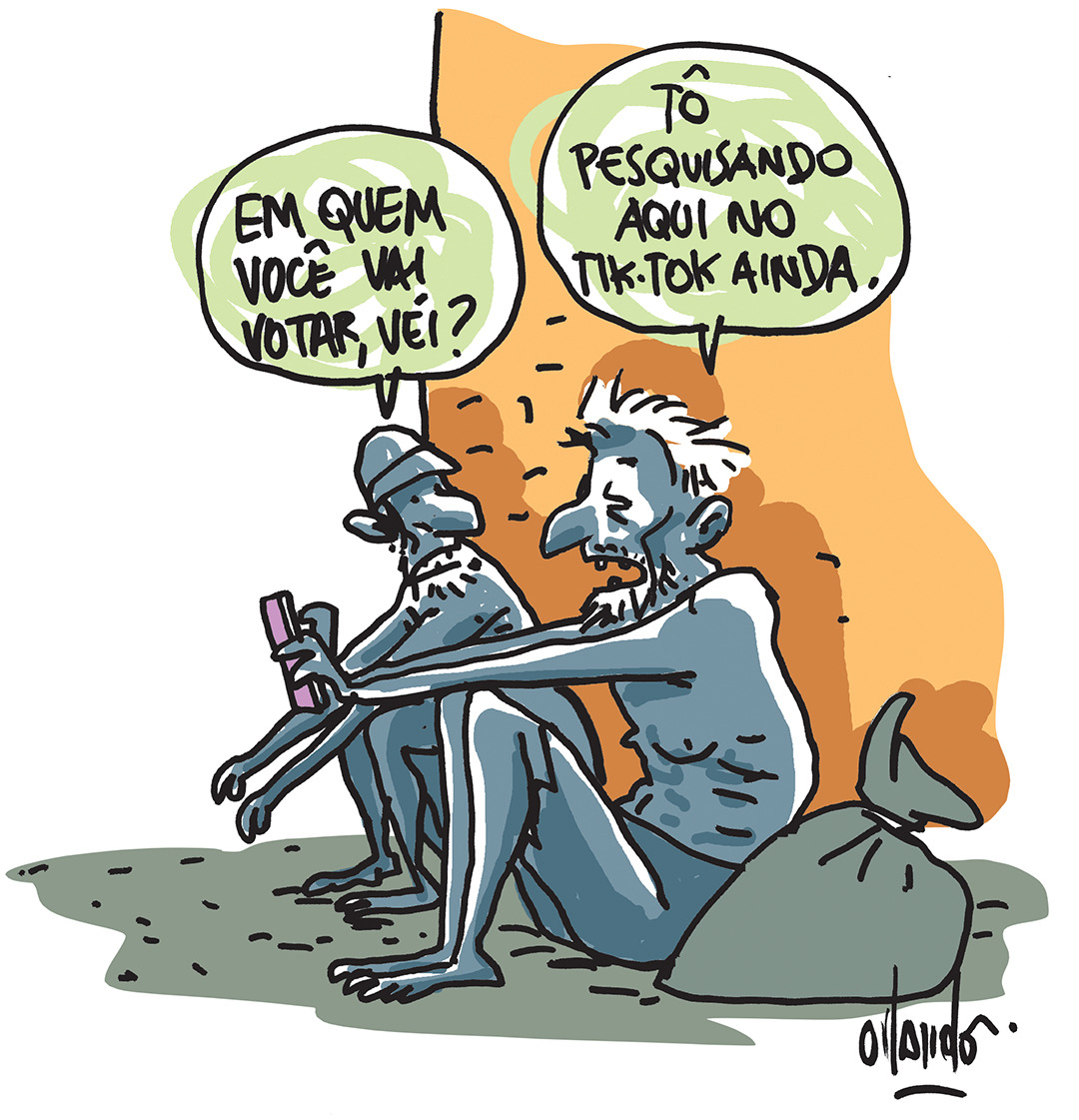
In fact, social media has become an important vehicle for electoral communication. Memes are the spearhead for reaching a younger and less politicized electorate. The battle for space on social media is fought with cards, posts, entertainment, and humor. These are ways to engage those who are not interested in reading long texts or content. However, the main factor that drives a presidential election remains the popular perception of quality of life.
Thus, the winner of an election needs to properly identify popular appeals. Good government shapes society, but only a government that is seen and perceived as bringing about effective improvements in people's living conditions is capable of remaining in power. Despite the flamboyant figure of the president-elect, there is no reason for Argentina to cry. Campaign rhetoric is mere illusion. Besides, Argentina has Messi.
More about
Politics


