



I know that the Brazilian electoral system needs profound changes. I would venture to say, at the risk of exaggerating, that it perhaps deserves to be completely rewritten for the current times. My brief, non-exhaustive list of issues includes district voting, abolishing the Senate, reducing the number of political parties, ending the role of alternate parliamentarians, prohibiting a return to parliamentary office if a position in the executive branch is attained, limiting parliamentarians to three consecutive terms in the same position, permanently removing civil servants who wish to run for office from their positions, and ending compulsory voting. However, as the country has been able to live with the current democratic rules, despite the upheavals that have shaken its institutions since 2014, culminating in the events of January 8 this year, it would be more prudent to carry out a gradual reform.
Certain measures are more complicated to implement. The change from a presidential to a parliamentary system, for example, would require in-depth debate. But other measures could be implemented more quickly and would generate important advances in the country's electoral dynamics.
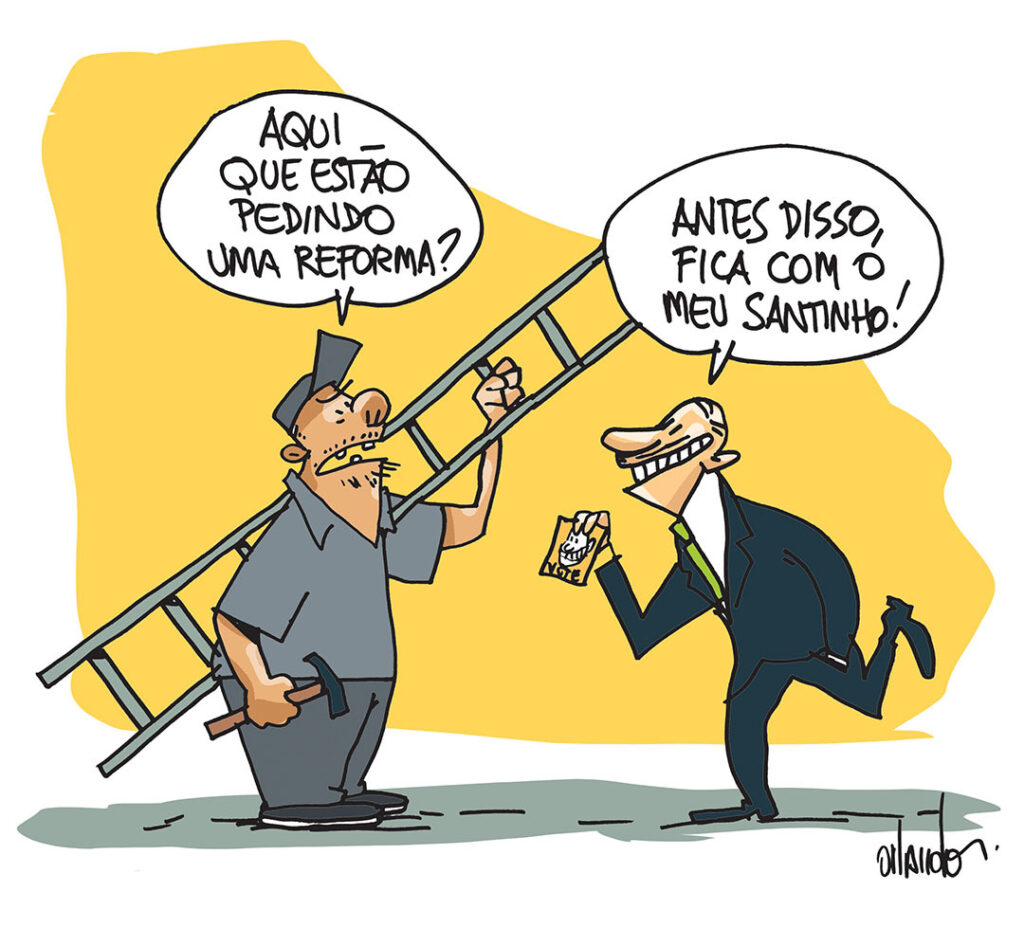
I know that some sociological studies advocate compulsory voting at the current stage of our young democracy, but this rule has long been outdated, both in developed countries and in Brazil itself. Here, as abroad, people are turning up at polling stations more out of choice or self-interest than out of obligation. The fine for not showing up is not high, and there is always the possibility of justifying your absence from the city. The right to choose a representative follows the right to want to vote. The law requires us to go to the polls, but allows us to annul our vote. It is a contradiction. I imagine that with the end of compulsory voting, boring election campaigns would become more attractive, because first you would have to convince voters to go to the polls and then who to vote for.
The limitation of successive terms, to three in my proposal, would also come at a good time. If it is true that any system requires time to mature, it is also true that the parliamentary bench needs to be refreshed from time to time. New minds and ideas need to be incorporated into the current scenario. The longer a parliamentarian holds office, the more roots they put down and the more accustomed they become to the ills of the system. In the last elections, several candidates failed to be reelected, which could mean that voters are adapting to new times. In reality, much of this failure was due to poorly planned campaigns and internal party betrayals. It is a vicious cycle. The longer someone spends in office, with the power of public funds to meet the needs of their constituents, the easier it becomes for them to be reelected. The system seems to have been created to make parliamentary office a lifetime position.
Another healthy measure is the obligation to permanently leave public office in order to run for a particular election. Judges, prosecutors, attorneys, police officers, etc. cannot, while in public office, run for parliamentary office and, if not elected, return to their previous activities. A quarantine period is not sufficient, as the nature of the functions is incompatible. Imagine police officers filming operations for campaign purposes, or judges deciding important disputes based on the greater acceptance of their electorate. Public office becomes an electoral lever.
District voting, a system in which each member of parliament represents a fixed group of citizens, encourages greater connection with voters and strengthens accountability and responsibility among elected officials. In addition to being a cheaper campaign, given that candidates only need to cover their electoral district, this system brings candidates closer to voters. The candidate with the most votes in their district will be elected. In the current proportional system, however, the complex nature of vote distribution, which favors the formation of party bases to the detriment of the absolute count of personal votes, tends to make it difficult to follow the election results. Voters are unclear about which candidates their votes are counted for and who was elected.
Election by nickname should also be improved. A serious candidate needs to present themselves by their first and last name. Zé da pipoca, tiozão da esquina, Maria dos salgados should not appear in campaigns or on ballots. Even if a person wants to associate their name with a nickname in their campaign, their full name makes it easier for voters to research their candidate. Campaigns end up becoming the butt of jokes, and little attention is paid to understanding who the candidate is and what their proposals are.
Reelection for the office of president should also be abolished. Fernando Henrique Cardoso succumbed to the siren song and exchanged the single five-year term for a constitutional amendment that allowed for reelection. It is known that he regretted this decision. The data show how difficult it is to lose a reelection bid due to the rampant use of government resources in an election year. The latter, as we have seen, exceeded any imaginable limit of unrestrained spending for electoral purposes. And nothing prevents it from setting a dangerous precedent for future elections. In the last two years of government, the administration begins to govern in campaign mode, to the detriment of the country's financial stability.
Another irritating issue, to say the least, is the possibility of leaving office before the end of the term to run for higher elected positions. The election to a position, such as mayor, is used to leave office in two years and run for another more important position, such as governor. The commitment to the original election is lost in order to focus on the new election, to the benefit of those who decided to resign from office. Why not establish a four-year quarantine for those who resign from the position to which they were elected?
It is clear that the country needs to update its electoral rules. If there is no political environment ripe for sweeping reform, then modern measures should be implemented each year to gradually improve the electoral system. What is not justified is inertia.
More about
Politics


