


The American expression "walk the talk" is commonly used to mean "do what you say" or "act according to your words." It emphasizes the importance of consistency between the words and actions of a person or organization. It is an expression that highlights integrity and credibility in the execution of commitments or ideals—and increasingly a luxury item there. In the whirlwind of contradictions that characterizes U.S. foreign policy, there is an inescapable paradox that echoes in the corridors of power and resonates around the world: the sovereign hypocrisy of a nation that proclaims freedom as its mantra, while stifling international competition and imprisoning journalists who do not reveal their sources; that defends democracy with rhetorical fervor, while sowing conflict in distant lands, subsidizing wars, and crippling other countries' economies.
The US faces an acute economic inequality crisis, particularly visible in large cities, where poverty and unemployment have reached alarming levels. According to the World Population Review, in Detroit, for example, about 37.9% of the population lives below the poverty line, and the unemployment rate is 19.8% — more than five times the national rate. Nationally, approximately 37.9 million Americans were living in poverty in 2022, with the child poverty rate more than doubling according to the Supplemental Poverty Measure (SPM) (Census.gov).
In stark contrast to this harsh reality, the US Congress recently approved a $90 billion aid package for the wars in Ukraine and Russia and Hamas and Israel. Meanwhile, critical domestic projects to revitalize the economy and support those most in need are at a standstill. This choice reflects the powerful arms industry lobby, which seems to distort national priorities in favor of third-party interests at the expense of the population. This is not a recent lobby, as it has historically influenced several other American military interventions over the years. Let's take a look: in the last 30 years, the number of major armed conflicts that we can recall without extensive research: the Gulf War (1990-91), Somalia (1992-95), Bosnia (1995-96), Kosovo (1999), Afghanistan (2001), Iraq (since 2003), Libya (2011), and Syria (2014). Not to mention the two most recent ones I mentioned above.
The hypocrisy of American economic policies is even more evident in the recent action against TikTok. Forcing the sale of the Chinese company on national security grounds directly contradicts the free market principles so vigorously defended by the United States in international arenas. This is a clear demonstration of protectionism that masks an attempt to contain the technological and economic advancement of a foreign power that is now its main rival. More than a security measure, this policy against TikTok reveals itself to be a disguised protectionist maneuver, creating pretexts for an economic and ideological struggle against China, the United States' great economic nemesis. Self-proclaimed guardians of freedom of expression and the economic preservation of its citizens, the US seems more interested in preserving its own interests, even if it means undermining the prosperity of others. While calling for an open and fair global market, it closes its doors to foreign companies that threaten its digital hegemony.
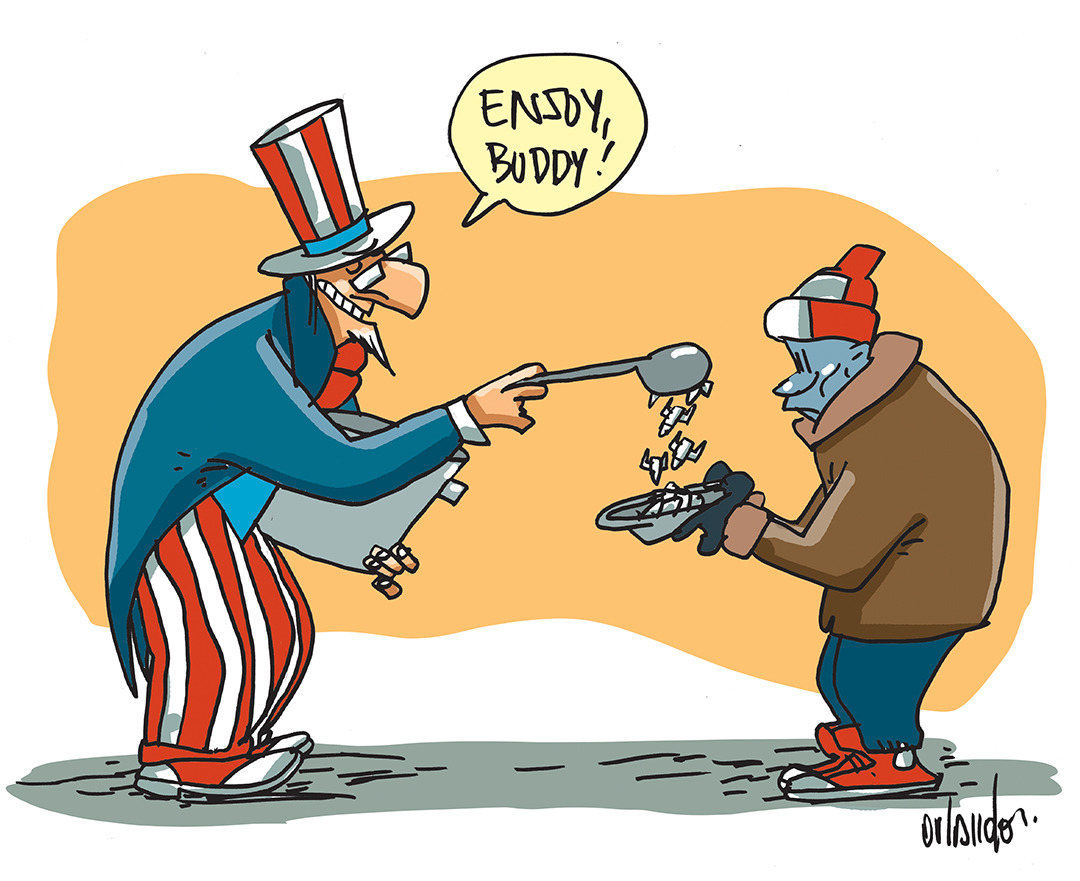
Behind the rhetoric of freedom and democracy lies a war machine that devours resources and lives, exporting conflict and instability around the world. The US subsidizes international wars, sacrificing not only Europe but also any trace of moral consistency. While investing billions in proxy military interventions, resources that could be used to improve the quality of life of its own citizens are diverted into an endless cycle of destruction and reconstruction.
Meanwhile, the American economy struggles with inequality and precariousness, where few prosper at the expense of many. The gains of globalization are concentrated in the hands of a corporate elite, while the working class faces precarious jobs, stagnant wages, and an uncertain future. The promise of a better life for all fades in the face of a system that prioritizes profit above all else, even if it means sacrificing the very pillars that sustain democracy.
In the United States, freedom is a privilege enjoyed by few, democracy is a game of interests, and economic preservation is a facade for global domination. While the world watches in bewilderment at the rampant hypocrisy that permeates American foreign policy, it is up to us to ask: who are the real beneficiaries of this shadow theater? And how long will we be held hostage by the empty rhetoric of a nation that preaches freedom but practices oppression? The gap between the US's words and actions not only compromises the integrity of its domestic and international policies, but also leaves millions of its citizens unnecessarily vulnerable. It is a tragic irony that a nation so rich and powerful chooses to finance distant wars while its own cities suffer from extreme poverty and declining infrastructure. This situation calls for critical reflection and an urgent reallocation of resources and priorities to meet the pressing needs of its population and maintain its position of global leadership in a fair and ethical manner.
More about
Politics


