



Can you rule without God? Without God I can, but without the bishops I cannot. Napoleon Bonaparte
In chess and politics, anticipating future moves is the basis for victory. In chess, the pieces on the board have different values depending on their greater attacking capacity. In politics, some positions are more valuable than others, depending on their political influence or robust budget. Therefore, more is always expected from these high-value pieces. In both cases, sacrificing pieces is used as a strategy, in chess to take a higher-value piece from the opponent and in politics for party compositions.
Politics and chess require intelligence and patience. They move according to their opponent's moves in search of loopholes. Attentive to these loopholes, congressmen are always trying to maximize their political and electoral capital. The secret budget, for example, was created as a way for the general rapporteur to make small adjustments to budget execution, but once the loophole was discovered, it became a veritable blank check. It is a ballet of advance and defense, with demonstrations of power aimed at checkmate or, in the case of politics, seeking greater power to define who dictates the rules of governance.
Lula has been using his main weapon prudently and judiciously. The finance minister has frequently and significantly demonstrated his surgical attack capabilities, coordinating well with Congress, but at the same time not exposing himself too much. For those who are more nostalgic, it is reminiscent of the game strategy of the famous Bob Fisher, the greatest American chess player who defeated the legendary Soviet chess player Boris Spassky, with his surprising use of the queen's gambit and the English opening.
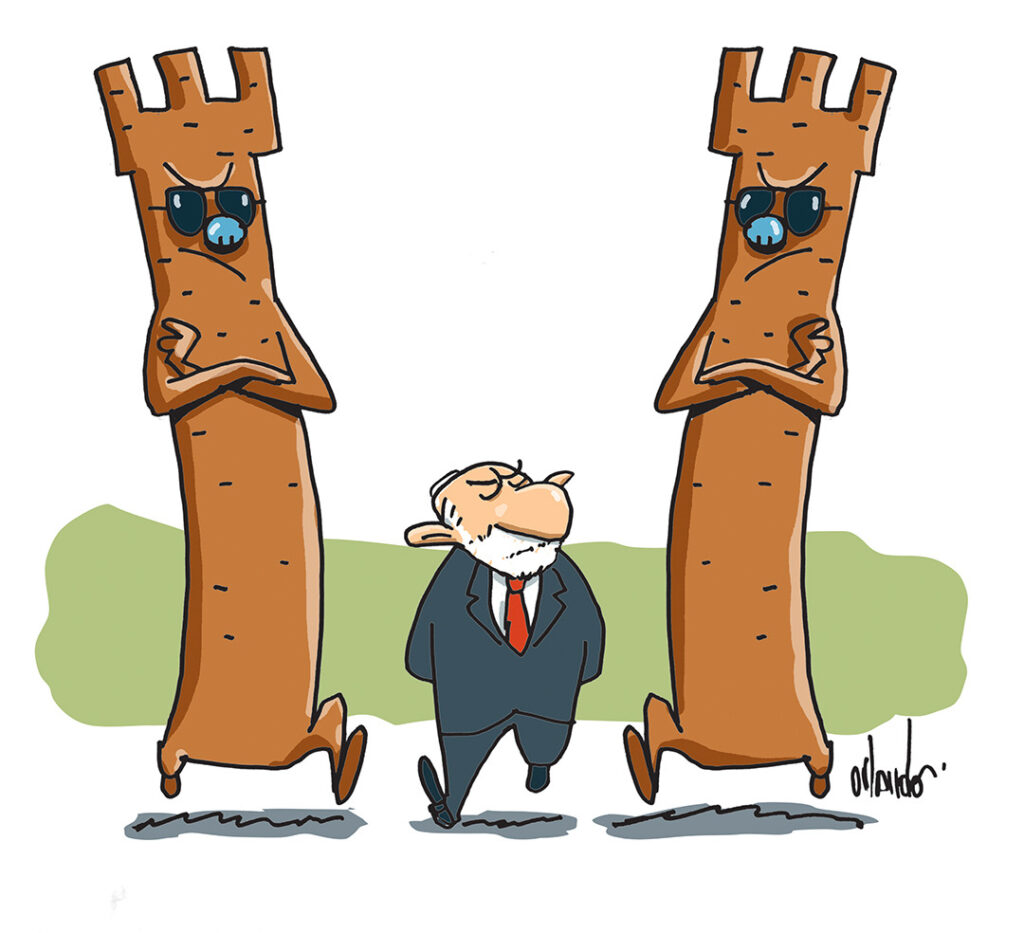
International agendas—including environmental and economic ones—have been the main successful moves of this administration, even with some blunders in the Ukraine war and in defending Venezuela's non-existent democracy. In both cases, the press paid a lot of attention to minor issues. Some pawns were lost with these moves, but nothing that would harm the political game.
Sacrificing pawns can be part of the strategy. But valuable pieces need to be preserved.
Even with these setbacks, Lula has been welcomed by the international community with great affection and respect. This is not only because of his many merits, but also because these agendas were devastated under the previous administration. Thus, aspiring to be a mediator in the Ukraine war and initiating a trade dispute with the US government and the European community are futile moves. They cause more harm than good. Especially since, on the international stage, he has already managed to restore the country's image in a short time. It is important that Lula does not resemble Bob Fisher, whose career was damaged by excessive vanity.
On the offensive, however, Fernando Haddad managed to pass the Transition Constitutional Amendment Proposal (PEC), the fiscal framework, and is expected to approve tax reform with the support of the governor of São Paulo, working closely with the opposition. To better understand the importance of this latest move, tax reform has been on Congress' agenda for three decades. On two occasions, the governors of São Paulo were primarily responsible for blocking previous reforms: Mario Covas during the Fernando Henrique Cardoso administration and José Serra during the Lula administration. In other words, Lula took a rook and a bishop in the political chess game and, for now, has lost only two pawns. He has a clear advantage.
Despite his advantage, Lula needs to remain vigilant and stay focused on the political game. The Ministries of the Civil House, Communication, and Institutional Relations (the towers of government) are exposed and subject to attack. They are extremely important pieces on the political board, but they are moving poorly. Losing them changes the game, as they are not pieces that are normally used for sacrifice. However, not using them properly to defend the king weakens the government. If at this point they are not performing as expected, Lula should consider replacing them, but only and exclusively by his own choice and not due to pressure from congressmen, as happened in the stressful approval of the provisional measure for the restructuring of ministries, when the government was forced to sacrifice important pieces with changes in the responsibilities of the Ministry of the Environment and the Ministry of Indigenous Peoples. The Minister of Tourism has already been sacrificed in favor of closer ties with the President of the Chamber of Deputies. Other sacrifices are still to come in this first year of government.
Now it is essential to seize the favorable moment.
In chess and politics, perfect timing is key. Tancredo Neves was not a great administrator, nor was he among the best speakers in the National Congress, but he had perfect political timing and, as a result, held almost every political office except that of President of the Republic, because this time divine timing prevailed.
The timing is favorable for the government and must be seized. The market is already predicting a drop in interest rates in August, the dollar remains low, and the stock market is optimistic. Even with these positive signs, the government needs to prepare for the battles that lie ahead. It needs support so that its economic agenda is not boycotted by the Central Bank, and it needs to dive headfirst into the political maneuvering required to get the tax reform approved in the Federal Senate, as that is where the dialogues with the states take place. Its towers must be activated and this time act with the competence that is expected of them.
The spectacular Soviet chess player Garry Kasparov referred to Bob Fisher as a genius, because he began dictating the conditions of the game off the board and then continued to dictate them on the board as well. If Lula does not do the same, congressmen will take the reins of governance and dictate the rules of the game, just as they did in the previous administration.
The similarities between chess and political games are not mere coincidences. There are unprepared players, lacking intelligence, unable to predict moves, unfamiliar with the rules of the game, and without political history. They are mere pawns who arrogantly set themselves up as political leaders and, forgetting their low value, try to become kings. Sergio Moro is a clear example. However, they will never be more than mere pawns, because this is the law of political chess.
More about
Politics


