



In the exciting world of soccer, Brazil has always been revered as one of the most iconic nations, brimming with talent and achievements that echo across the world's soccer fields. However, amid the spotlight and glory of the past, a shadow looms over the present: the crutches of Brazilian soccer.
It is undeniable that the quality of soccer played in Brazil has fallen dramatically in recent years. The spectacle that once enchanted crowds now languishes in a sea of mediocrity, reflected in truncated matches lacking in creativity and excitement. And the excuses? Ah, the excuses... They flood post-game interviews, diverting attention from the real problem.
If we take a closer look at the third round of the 2024 Copa do Brasil, we see a bleak picture of the current situation. Fifteen games, most of them clashes between Serie A and Serie B teams. The result? Only three games with a difference of two goals or more, while the rest fluctuated between draws and narrow victories. Palmeiras, Vasco, Flamengo, Corinthians, Botafogo, and Grêmio, all facing Serie B teams, performed below expectations. Are our teams, which are so often touted as superior to their South American rivals given the economic discrepancy between Brazil and other countries in the region, really that good? After all, they are unable to impose themselves on opponents from Serie B and Serie C in local soccer.
We cannot ignore the Brazilian national team's poor results in recent World Cups. Since winning the title in 2002, the Brazilian national team has seen a decline in its World Cup performance. In 2006, in Germany, it was eliminated in the quarterfinals by France. In 2010, in South Africa, it was eliminated by the Netherlands. The lowest point came in 2014, when we suffered a humiliating 7-1 defeat at home to Germany in the semifinals. In 2018, in Russia, the team was eliminated in the quarterfinals by Belgium. And everyone still remembers the mess in the Qatar World Cup, when Croatia sent us packing.
If many say that statistics don't lie, let's look at them to delve a little deeper into this criticism. A study by the French company SkillCorner, published by the CIES Football Observatory, reveals that Brazil ranks below less traditional leagues such as Sweden, Poland, and Greece in terms of running intensity during matches. Are external conditions such as the schedule, pitches, and refereeing solely to blame for these scientific findings?
One more point: many believe that Brazil is the world's greatest source of soccer stars. Are we still producing talent on the same scale as in the past? Name some of the great Brazilian stars who have come close to winning FIFA's Best Player in the World award. We have two valuable players at Real Madrid (Vinicius Júnior and Rodrygo), a rising star (Endrick), and...
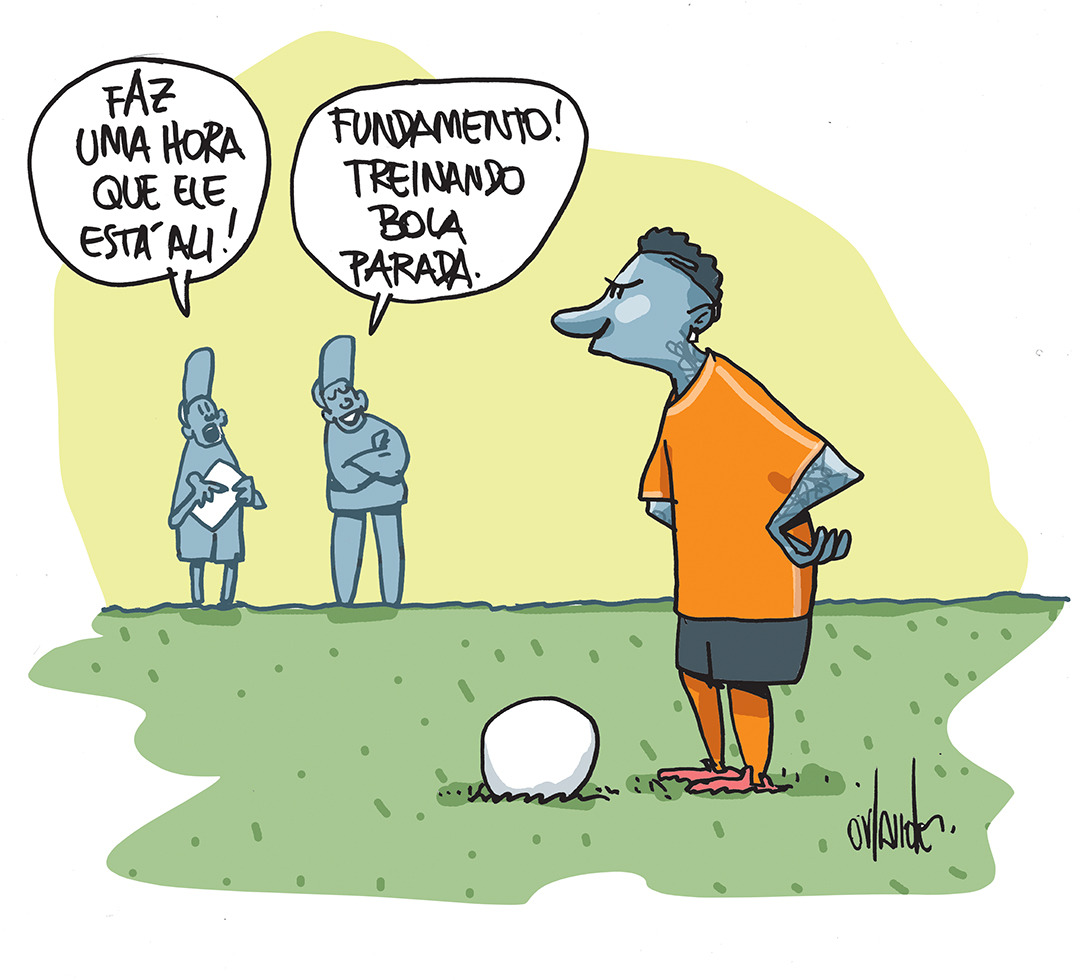
Why are we experiencing this? Is our foundation deficient? Are the big clubs more concerned with selling players than developing true stars? I have the impression that Brazilian players no longer know how to pass, no longer know how to shoot, no longer know how to finish, no longer know how to head the ball. Their basic skills have declined significantly in comparison to foreign players. Young Brazilians, who are born with great talent, are being sold to European clubs and, when they get there, they have to reinvent themselves—which explains why athletes are being bought at an increasingly younger age. Not necessarily to have a longer career on the field, but because it takes more and more time to rid them of the bad habits and vices that come from a poor foundation. In the past, stars like Zico and Socrates arrived at teams to be starters. Today, junior players are bought because they need to adapt to more than just the climate, city, and food. The process involves teaching basic fundamentals.
It is unacceptable that a country with our history and passion for soccer should be content with such below-average performances. We need a thorough and courageous analysis of the current state of Brazilian soccer. There are certainly several factors contributing to this situation. Among them, I highlight the increasingly disastrous management of clubs, drowning in debts created by boastful officials who lack professionalism and a real desire to solve the problems of the institutions they run.
But I don't want to analyze each of these factors that denigrate our soccer here. I want to emphasize that the time has come to unmask the crutches that sustain this decline and seek real solutions to revitalize the sport we love so much. We can no longer watch European championships and the Brazilian Championship and be sure that they are two different sports. That soccer is played there and here, something that tries to resemble the old Breton sport. Especially because, if we look at the average attendance figures for our championships, we see that, unbelievably, they are increasing. And contrary to what many people think, this is not a reflection of an improvement in the quality of the spectacle. Rather, it is a reflection of the fact that spectators are becoming accustomed to and resigned to this low level of soccer.
If we want to regain our prominent place on the world's soccer fields, it is imperative that we act now. We can no longer hide behind lame excuses. Brazilian soccer deserves better than that. And we, as lovers of the sport, deserve to see our national team and our clubs shining again, with a game worthy of our tradition.
More about
Sports


