


In 1687, Isaac Newton published in the *Principia* the three laws that laid the foundation for modern physics. The third of these became the best known outside of laboratories: for every action, there is an equal and opposite reaction. More than three centuries later, this principle offers a precise key to understanding what is happening with sportsbooks in Brazil. This Friday, September 25, President Luiz Inácio Lula da Silva will announce in São Paulo a provisional measure to ban sports betting in the country, nine days before the first round of the elections. The decision has broad support. An Atlas/Bloomberg poll released on September 23 shows that 75% of Brazilians favor the ban and only 17% oppose it.
The debate tends to settle into predictable camps. On one side, the measure is seen as protection for indebted families; on the other, as an abrupt intervention in a regulated market, in the name of economic freedom and the right of every citizen to decide how to spend their own money. Both arguments are legitimate. The numbers have already shown that gambling is harmful to families; the principle of economic freedom, which advocates letting companies operate and innovate, is also defensible. Above and beyond these controversies, there is a question that both sides overlook: how does one introduce a new consumption habit on a large scale without any regulation at the source?
The answer explains why the backlash was so strong. The industry barged in, into a lawless land, rejected every restraint offered to it, and is now facing a force of equal intensity in the opposite direction. He who wants too much gets nothing.
Six Years of Inaction
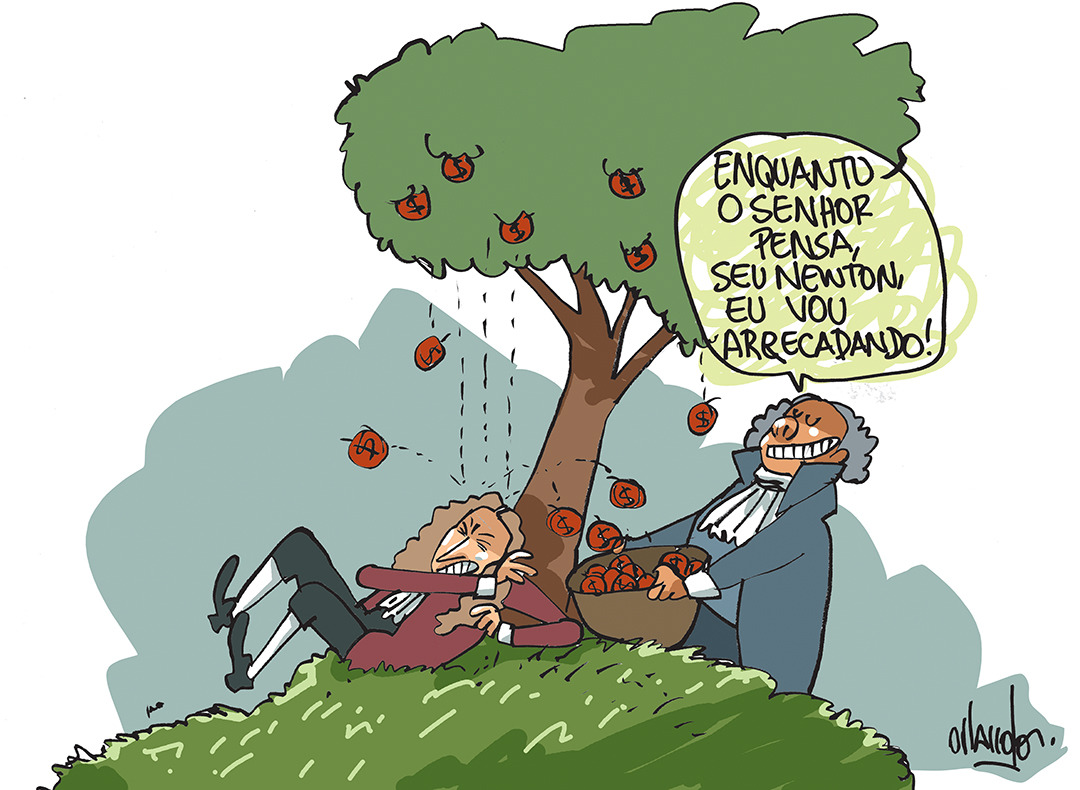
Newton’s first law states that a body in motion remains in motion as long as no external force acts upon it. This is exactly what happened in Brazil. Law 13,756, signed into law by Michel Temer in December 2018, authorized fixed-odds betting but deferred its regulation to a later date. The government remained inactive, and this inaction spanned three administrations. Temer authorized it without regulating it, Bolsonaro let the legal deadline pass without issuing the rules, and it took Lula’s third term a year to pass Law 14,790 in December 2023. At least, then, something was done. Effective taxation did not begin until January 2025. For more than six years, any company could open a betting operation, operate from abroad, and tap into the Brazilian market while paying virtually no taxes in the country.
The power vacuum attracted what an unregulated market tends to attract. In October 2025, the Federal Police’s “Operation Narco Bet” investigated companies in the sector that were used to give the appearance of legality to funds from international cocaine trafficking routes and led to the arrest of influencer Buzeira, who had more than 15 million followers. The Federal Police also concluded that the intermediary company handling the sponsorship deal between Corinthians and Vai de Bet diverted funds to a shell company identified as an arm of the PCC. On July 15, 2026, Operation Slots froze up to R$951 million belonging to a group that used social media influencers to promote illegal websites and launder drug trafficking proceeds. Over two years, the companies under investigation reportedly handled more than R$10 billion.
When you take the social impact into account, the balance is heavy. Bookmakers pay little tax, create few jobs in Brazil, do not drive economic growth, and bring almost no collective benefit—with the exception of sponsorship deals with soccer clubs and occasional initiatives here and there. Large amounts of money have circulated, yet the return to society has been close to zero.
Mass, Acceleration, and Addiction
Newton’s second law states that force is the product of mass and acceleration. Applied to social life, the formula suggests that the impact of a change depends on its magnitude and the speed at which it occurs. In just a few years, betting companies have altered the behavior of millions of Brazilians. They took over TV commercial breaks, cell phone screens, and the fronts of soccer jerseys: by 2025, 18 of the 20 Serie A clubs had a betting company as their title sponsor. A marginal habit became a mass phenomenon and, for a significant portion of bettors, turned into an addiction, plunging entire families into debt.
This point changes the nature of the debate. As long as gambling was viewed as entertainment, the argument for freedom of choice prevailed. Once it clearly became an addiction—with widespread rates of dependency and debt—it entered the realm where the government must act. Combating addiction on a societal scale is a classic responsibility of the government, and the industry has allowed itself to be transformed into precisely that target.
Any initiative that brings about a change in behavior or breaks a habit must be carried out with restraint and caution, because when collective behavior changes all at once, society’s capacity to react grows in equal measure. From a strictly economic perspective, rapid expansion may seem advantageous, but it is short-lived, because a backlash follows—as it has in many countries and is now reaching Brazil.
Karl Polanyi described this mechanism in *The Great Transformation* (1944). According to the Hungarian economist, whenever the market encroaches on social life without restraint, society responds with a self-protective counter-movement—a phenomenon he called the “double movement.” It is Newton’s third law applied to political economy. The very momentum with which betting companies entered Brazil produced a counter-movement of equal intensity and force.
The Lobby's Misstep
There was a solution that the industry chose to ignore. The tax on gross gaming revenue, set at 12% by the 2023 law, fell short of international standards. In June 2025, the government attempted to raise it to 18% through Provisional Measure 1,303, which expired without being voted on. In the Senate, Renan Calheiros proposed doubling the rate to 24%, and the rapporteur, Eduardo Braga, reduced the increase to 18%, to be phased in by 2028. In the Chamber of Deputies, the rate was lowered once again. The approved and enacted bill calls for a rate of 13% in 2026, 14% in 2027, and 15% in 2028. Of the proposed 24%, only 13% remains.
An international comparison highlights the scale of the concession. In the United Kingdom, the tax on online casinos will rise from 21% to 40% in April 2026, and remote sports betting will be subject to a 25% tax starting in April 2027.
The lobby won the battle but lost the war. If it had worked to accept a high tax burden, the sector would earn less and build its own shield. With high tax revenue, any government would find it difficult to take drastic measures, because the social benefit of eliminating tax loopholes would weigh too heavily on the budget. Even with low tax rates, the federal government collected R$ 9.91 billion from the sector between January and August 2026. With double or triple that amount at stake, today’s political calculus would be quite different.
No one likes being taxed, but those who see the tide turning against them must adapt. The tobacco and alcohol industries know this rule well. Both oppose the so-called “sin tax” without making much of a fuss, because they know that advocating for tax breaks on products harmful to health is to defend a losing cause. The tax reform has already included sports pools and betting under the Selective Tax, though the tax rate for the sector has yet to be determined. Betting companies had the chance to adapt to this logic but chose to fight it.
The world has come to a standstill, but Brazil has moved forward
It is cynical to imagine that the reaction to sports betting is a uniquely Brazilian phenomenon. Countries that coexist with the industry impose restrictions and high tax burdens. In England, the Premier League has banned betting logos on the front of jerseys starting with the 2026–27 season. The decision was made voluntarily by the clubs in April 2023, following consultation with the British government, with a three-season transition period. The restriction has its limits, as bookmakers’ logos remain on the sleeves, on practice uniforms, and on advertising boards behind the benches. The key point lies in the sequence of events: there, the industry accepted the restriction before the backlash gained momentum.
Brazil took the opposite approach. Due to excessive lobbying and a weakened Congress, it left the sector completely unregulated, and the backlash, predictably, was fierce.
Soccer as a Shield
Soccer clubs were the most visible beneficiaries of this cycle and became the front line in defending the sector. On September 17, Serie A clubs issued statements opposing the ban, warning that the measure would spell the end of Brazilian soccer and that an abrupt change in the rules would jeopardize contracts and investments already in place. The numbers debunk this prophecy. As Professor Pablo Ortellado of USP noted in a column published in *O Globo* on Friday, September 25, sponsorship from sportsbooks accounts for between 6% and 8% of the budgets of major clubs, and the cut would affect all of them similarly, without altering the financial hierarchy among them. Brazil’s dominance in the Libertadores began in 2019, before the boom in sponsorships, and can be attributed to effective management, market size, and well-negotiated broadcast rights.
Tolerance for the industry goes hand in hand with the benefits it provides. Clubs and companies that have received large sums from betting are, naturally, more patient with it. Those who don’t benefit—and only see their families falling into debt without the industry generating jobs or income—view betting with a natural skepticism.
The public has also made its choice. A More in Common-Ipsos survey indicates that 68% of Brazilians prefer a ban even if it harms the clubs, and that 58% believe that betting significantly increases the risk of match-fixing. When fans begin to distrust the score, the damage to soccer outweighs any sponsorship deal.
The locks that no one wanted to create
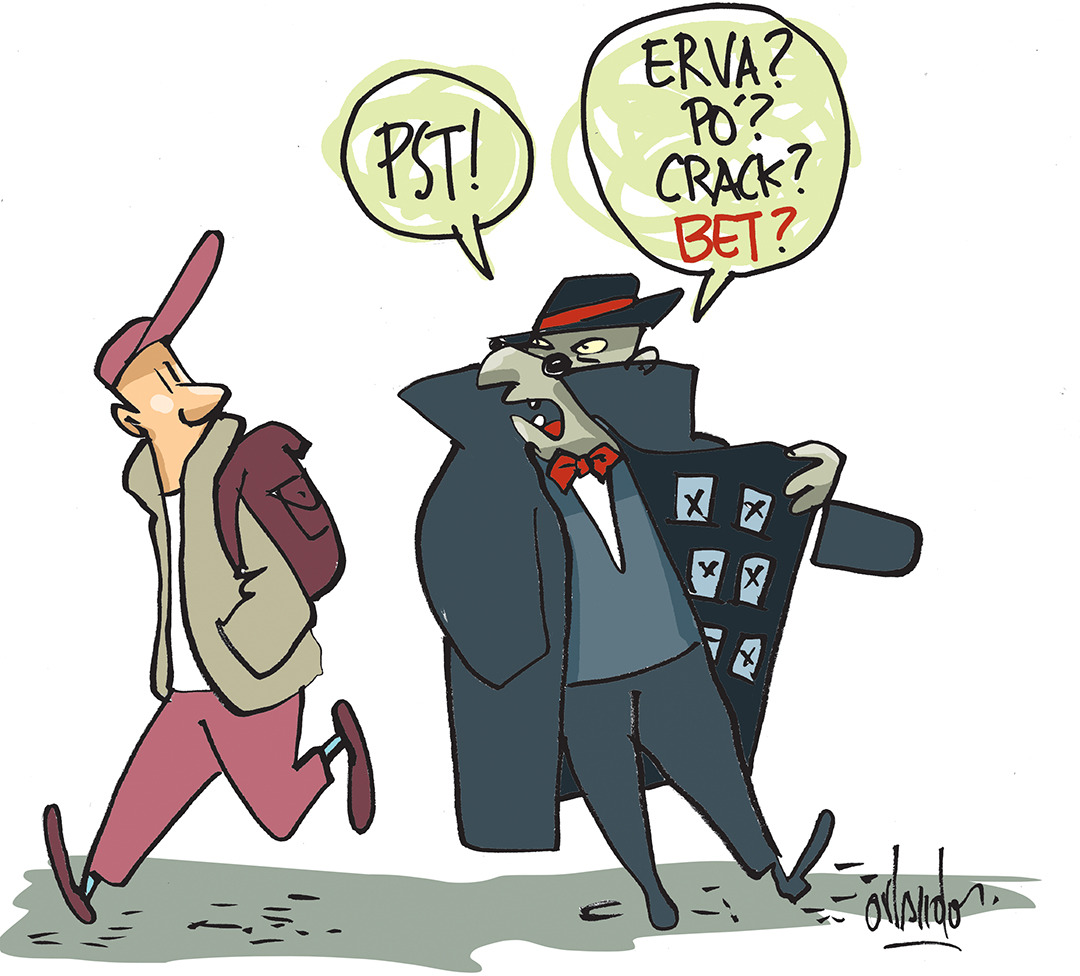
The most revealing irony of the episode lies in the tools available. A well-enforced ban can make gambling difficult and inconvenient without driving all players underground. All it takes is removing apps from app stores, blocking domains, monitoring advertising, and blocking Pix and credit card payments for gambling through blacklists. These are, in essence, the same tools the industry itself could have adopted years ago, on its own initiative, as technological safeguards to prevent betting by people with compromised income. The industry could have gone further, funding social projects and campaigns to discourage addiction, in an effort to ensure a soft landing in a country that was still unfamiliar with this market. It would have made less money, it’s true, and would face much less backlash today. The tools that now serve to enforce a ban could have been used for self-regulation. The betting companies had the means to avoid social backlash and chose to ignore them.
This episode should serve as a lesson for another sector where the same phenomenon is playing out. Major digital platforms spent years fighting any form of regulation, while the European Union created its own—the Digital Services Act—and other countries followed suit, each in its own way. The more the platforms resist, the stricter the rules they end up facing tend to be. Lula himself made this connection when he promised to put an end to betting sites and regulate the platforms, just as he did with the Digital ECA. Those who ignore the problem while profiting from it hand over the pen to someone else to solve it.
The same lesson applies to artificial intelligence companies, which are expanding their products into the social sphere at an even faster pace than betting platforms and social media. The European Union has already passed its artificial intelligence law, and the regulatory debate is moving forward in other countries. Companies in the sector still have the chance to self-regulate while they can set their own terms, before society’s reaction dictates them for them.
Why Gradualism Fails in Brazil
It would be possible to implement a more gradual process, with progressive restrictions on advertising, deposit limits, and phased tax increases. In theory, that would be the ideal approach. Recent experience in Brazil shows why it rarely works. In the first stage, the gradual measure has no impact whatsoever. In the second stage, just as they would begin to take effect, the betting companies have already mobilized their supporters in Congress and neutralize the effect, so that, in the end, nothing comes of it. The tax rate, which fell from 24% to 13%, is a prime example of this mechanism.
To many, the ban may seem radical. And it is radical to the exact same degree as the inaction that preceded it. What was truly radical was allowing a market of this size to operate for six years without regulations, without significant taxation, and without any checks and balances.
None of this eliminates the risks of the decision. The provisional measure comes nine days before the first round of voting and will inevitably be viewed through an electoral lens as well. It will need to be approved within 120 days by the same Congress that reduced taxation on the sector. The lost tax revenue will have to be offset, and the black market will require constant oversight. The ban corrects the excess on one side with a move to the opposite extreme, and that is precisely the cost of having let the pendulum swing unchecked for so long.
The Law That Cannot Be Repealed
Newton’s laws allow for no exceptions for the sake of convenience, and neither do the dynamics of society. Anyone who seeks to change a society’s behavior all at once must expect a response of equal intensity from it. The betting companies had six years of inertia working in their favor; they accelerated unchecked and rejected all the safeguards—fiscal, social, and technological—that could have ensured their survival. Had they done things right from the start, the backlash would certainly have been less severe. Accepting regulation would have been the price of insurance; rejecting it became their undoing.
The warning extends beyond the betting market. Newton has been buried in Westminster Abbey in London since 1727. Artificial intelligence companies would do well to take the betting industry as an example and self-regulate in time, to prevent him from rising from the grave and applying his relentless laws to them as well.
Faced with the “all or nothing” scenario the industry itself chose, society responded with “nothing.” Those who want too much end up with nothing. The bookmakers lost the only bet that really mattered: that there would be no reaction to the action.
More about
Behavior


