


On Sunday, October 4, the polls narrowed Brazil’s choices down to two options. Flávio Bolsonaro finished the first round ahead of Luiz Inácio Lula da Silva, by a margin of less than two percentage points. On October 25, one of the two will be elected president of the Republic.
From this point on, each analyst’s personal preference becomes irrelevant. What each one thought about the right and the left has already been stated—and voted on—in the first round. Two opposing platforms remain, and the question that matters to voters has become more matter-of-fact: if one of them wins, what does the country gain, and what is at risk? Debating whether Lula is good or bad, or whether Flávio is prepared, has become a futile exercise. What matters is assessing the concrete consequences of each victory.
This text is not intended to cover the topic exhaustively. Each of the following points would merit an article of its own. The aim is to provide a brief overview, with each candidate’s strengths and weaknesses presented side by side, without bias or speculation about their intentions.
Nor is it worthwhile to compare campaign promises with reality. Every campaign promises more than any government can deliver, and campaign promises almost always lead to frustration. The criterion here is different and more demanding: each candidate’s actual ability to deliver a better Brazil by 2030. This ability is measured by two factors that rarely go hand in hand: the political clout to pass legislation and the experience to implement it.
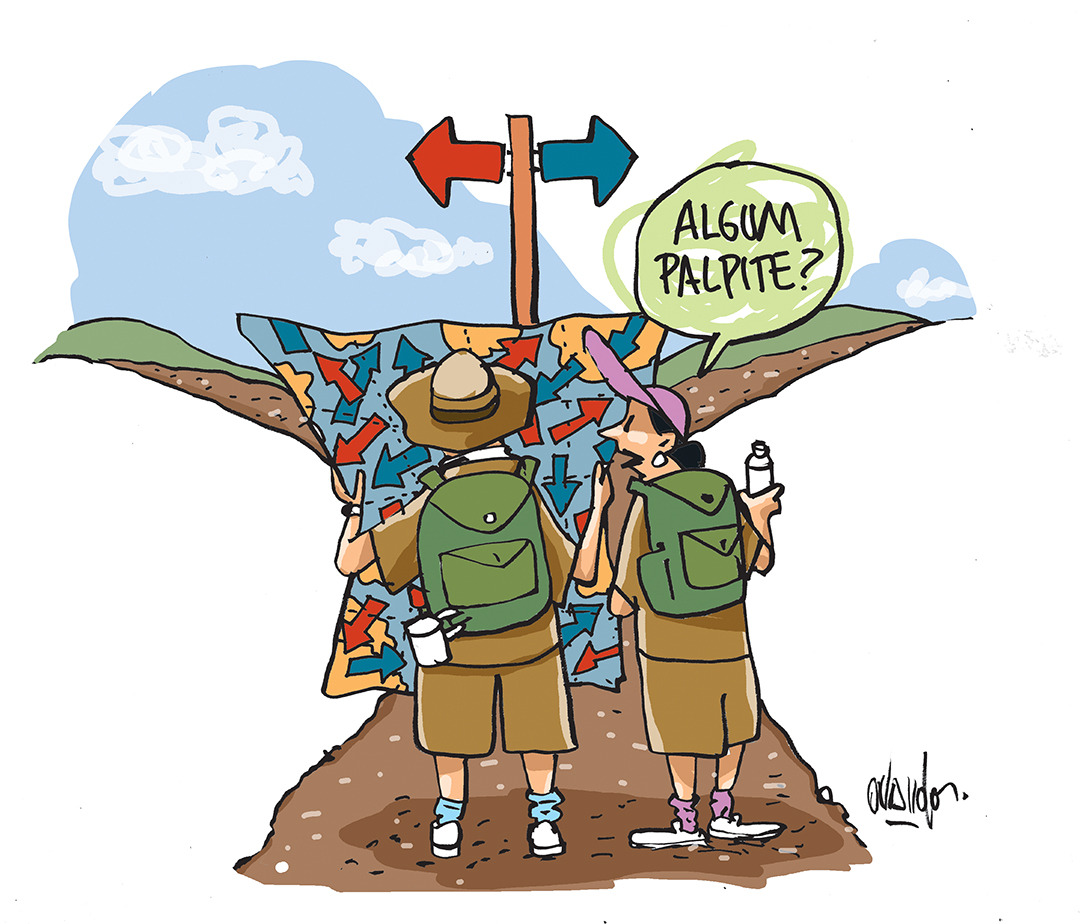
Flávio and the level of governance that no other president has ever had
Since the return to democracy, Brazil has elected more left-wing and center-left presidents than right-wing ones, and Congress has almost always remained to the right of the Planalto. Right-wing presidents have had troubled tenures. Fernando Collor was impeached. Michel Temer took office as a result of another impeachment. Jair Bolsonaro, elected in 2018, had to hand over part of the government to the Centrão coalition to survive in Congress.
The political landscape in 2027 looks different. The PL elected 121 representatives—the largest caucus in the Chamber of Deputies—and will hold 28 seats in the Senate, where no other party is expected to reach even one-third of that size. Combined with the other right-wing caucuses, these forces would give a potential Flávio administration the broadest alignment between the executive and legislative branches since 1988.
This is Flávio’s main asset. Sérgio Abranches coined the term “coalition presidentialism” to describe a system in which the president governs by negotiating, on a vote-by-vote basis, with a Congress over which he has no control. Under this arrangement, structural reforms have moved forward in piecemeal fashion, losing their substance along the way. A president with his own base of support would be in a position to pass changes that the country has been putting off for decades.
The caveat is a matter of arithmetic. An absolute majority requires 257 representatives and 41 senators, and the PL alone cannot reach that number. Flávio would continue to depend on centrist parties, with a more favorable starting point for negotiations than any recent president has had.
The power to pass laws, but no experience to implement them
Flávio’s greatest weakness is his lack of administrative experience. His entire career has been in the legislature, first as a state representative in Rio de Janeiro and later as a senator. He has never headed a city government, a state government, a ministry, or any other administrative body. The presidency would be his first executive position—and, moreover, the most complex one in the country.
The distinction matters. Passing a reform in Congress is one thing; turning it into a functioning public policy—with a budget, staff, regulations, and coordination among ministries—is another. Governance ensures the first step. The second depends on those who know the inner workings of the government, and it is here that many administrations with comfortable majorities have failed.
Another liability appears in the public accounts. Over the past four years, Flávio and his allies have promised a fiscal shock capable of putting the state’s finances in order—a platform that mobilized the Faria Lima crowd. In conversations with the campaign’s economic advisors, however, the idea of a fiscal shock has disappeared. Social programs would undergo specific adjustments. Benefits granted to industry and the business sector would remain untouched, as would exemptions for the financial market. The focus is on improving management, with estimated savings ranging from R$ 120 billion to R$ 200 billion—a modest figure compared to the austerity measures the market itself demanded throughout the Lula administration.
The candidate’s legal situation also weighs heavily. Flávio is under investigation in 11 cases by the Federal Police. The presumption of innocence applies to him just as it does to any citizen. A president under investigation, however, governs under constant pressure, with his agenda constantly dominated by his own defense team.
Re-election, the Supreme Court, and Institutional Risk
In March, Flávio filed a proposed constitutional amendment with the Senate that would ban presidential reelection, and his campaign is considering the adoption of a single five-year term. This is a positive development. Reelection, introduced in 1997, turned the first term into a permanent campaign, and its abolition is supported by figures from various political parties.
The problem lies in the effective date. A change that would take effect starting with the next term—regardless of who is elected—would be legitimate. A president elected to a four-year term who approves an extension of his own term to five years is staging a coup, even if it is disguised as a constitutional amendment. Voters in 2026 will elect a president for a four-year term, and no subsequent adjustment can alter that contract to the benefit of the person who signed it.
The second risk involves the judiciary. Expectations are beginning to circulate in political circles that a Flávio administration would undertake judicial reform. Reforming the judiciary has been recognized as a necessity for years. The version being discussed within the candidate’s inner circle, according to sources close to the campaign, calls for stripping the Federal Supreme Court of its powers. With the executive and legislative branches aligned, two branches would join forces to weaken a third, in direct defiance of the separation of powers—an unalterable provision of the Constitution. Steven Levitsky and Daniel Ziblatt describe this phenomenon as the “capture of the referees”: democracy loses the judge tasked with adjudicating the dispute. This publication has already discussed, in “Presidentialism in Robes,” the risks of the Court’s politicization. Stripping it of its powers through an agreement between the other two branches would take the problem to a whole new level.
Lula and Stability Without a Majority
Lula has exactly what his opponent lacks: three terms as president and the proven ability to put the government apparatus to work and deliver results—not always everything that could be achieved, but with the insight of someone who has already governed the country under very different circumstances. Added to this is institutional predictability. With the prospect of a fourth term, there is no possibility of a constitutional crisis, a term extension, or a deliberate confrontation with the Supreme Court. Social programs would continue, and the fiscal commitment would remain—less aggressive than the market desires but compatible with social stability.
The challenge lies with Congress. The legislature that takes office in February 2027 will be the most hostile Lula has ever faced, with the right wing holding the largest caucuses in both chambers and a plenary that is both conservative and fragmented. The president’s negotiating skills—another recognized strength—would reach their limit here. Lula has always negotiated with the Centrão, a pragmatic bloc that traded support for positions in the government. The Congress elected in 2026 has diminished that influence. In the Senate, the PSD fell from 14 to five seats, while the PL moved into the space that previously belonged to centrist parties. With fewer interlocutors willing to negotiate and more lawmakers aligned with the opposition out of conviction, the cost of each vote would rise and the outcome would remain uncertain.
Lula would also need to thoroughly revamp his team, both within the administration itself and beyond the campaign staff.
There is also the weight of the promises made in 2022. Lula stated that he would not run for a fourth term, but ended up doing so. He promised a broad coalition to ensure governability, but it never materialized. The allies from that election were given a role, but without the actual division of power that had been expected. A considerable portion of the opposition the government faces today stems from this frustration.
The case of Geraldo Alckmin illustrates the problem. Lula was expected to pave the way for his vice president to run in this election. Alckmin struggles with communication, and his election results outside São Paulo have been weak. Even so, he would receive a significant portion of the left-wing vote and manage to attract the center and the center-right, which would make the race even more favorable to the ruling coalition. Alckmin has been weakened over the past four years, and only now is there a visible attempt to revive his campaign.
The only way out for Lula would be to convince the PT that the party has lost the dominance it once had and that it needs a truly broad coalition, with power effectively shared, so that a moderate candidate can run in the next election with a real chance of winning. As things stand, the PT is headed for decline. A defeat now would favor Flávio or another figure from the right remaining in power for more than one term, especially if reelection is allowed.
Brazil in the World of 2030
The world of 2030 will be shaped by artificial intelligence, the energy transition, and competition between the United States and China. Brazil enters this landscape with concrete advantages in food, energy, and natural resources, and with the task of turning them into innovation, productivity, and access to new markets.
The two candidates propose different paths for this transition. Lula advocates for relations with a variety of trading partners and the continuation of environmental policies. Flávio proposes closer ties with the United States, regulatory simplification, and incentives for private investment.
In both scenarios, there are more uncertainties than certainties. With Flávio, a closer relationship with the United States is considered a given. Its impact, however, depends on the substance. No one knows whether this rapprochement will remain confined to Eduardo Bolsonaro’s ideological rhetoric or whether it will lead to concrete measures, nor whether the tariffs imposed by Washington on Brazilian products would survive a government aligned with the U.S. The Brazilian Foreign Ministry itself believes that the tariffs were politicized and are aimed at the Brazilian election.
With Lula, the uncertainty has taken a different turn. His personal relationship with Donald Trump has improved, and a phone call in August reopened the dialogue on tariffs. There is no guarantee that this positive rapport will translate into practical results.
Outside the U.S. sphere of influence, the picture becomes clearer. A relationship less dependent on Washington has pushed the Lula administration to open up new markets, and this diversification is likely to continue. With Flávio, the expectation of full alignment with the United States reduces the incentive to seek alternative partners, which concentrates trade risk in a single destination.
The results will depend on international negotiations and global economic conditions—factors that neither side can control. The challenge for the next administration will be to capitalize on the opportunities arising from the rivalry among the major powers without sacrificing the diversity of Brazil’s trade relations.
One final point applies equally to both scenarios. The next president will nominate justices to fill the vacancies that will open up on the Supreme Court, and those nominations will be subject to a Senate that is more conservative than the current one. As this column analyzed in “Supreme Court Without a Supreme Court,” the Court’s composition in the coming years is directly tied to the election results.
Democracy Between Elections
No one can say today which of the two will run the better government. Any prediction in this regard would be an exercise in futurology. Experience, policy proposals, and parliamentary support all matter, and none of these factors, taken in isolation, guarantees a specific outcome.
One conclusion holds true regardless of who wins: Brazil cannot leave its future solely in the hands of those in power. The public’s low level of trust in Congress and the judiciary reveals an institutional problem that must be addressed. The influence of partisan and corporate interests on political decisions, along with the controversies surrounding the Supreme Federal Court’s actions, make it all the more necessary to demand transparency, respect for the respective powers of each branch of government, and a commitment to the public interest.
That is why civil society must continue to participate after Election Day. Businesses, universities, the media, social organizations, and citizens have the responsibility to monitor public decisions, hold elected officials accountable, and demand results throughout the four-year term. A country depends on good leaders, on institutions that function properly, and on a society that participates continuously in its democratic life.
In 2026, Brazilians will choose who will govern. Until 2030, it will be up to society to monitor, oversee, and hold officials accountable for fulfilling the responsibilities they have assumed. The polls close at the end of the election; it is between one election and the next that democracy must demonstrate its results.
More about
Politics


The Power of Those Who Lose

The Debate Nobody Wanted
Supreme Court Without a Chief Justice


